
This page may contain affiliate links; you can read our full disclosure.
When food runs low and the wilderness isn’t offering a buffet of berries and good decisions, survival fishing becomes one of the smartest ways to stay fed. Knowing how to catch fish without fancy gear gives you a huge advantage in an emergency. These skills help you turn whatever’s around you into real, edible protein.
Survival fishing isn’t about sport or finesse. It’s about using the environment, simple tools, and basic instincts to secure food when you need it most. The more methods you know, the better your odds of catching something worth eating.
Understanding Fish Behavior
Before you start throwing lines or building traps, you need to understand how fish behave in different environments. Knowing where they hide, feed, and travel helps you target the right spots instead of wasting energy.
Where Fish Tend to Gather
Shaded areas, deeper pools, submerged logs, weed beds, and slow-running pockets of a river are common holding zones. These places offer cover and ambush points for feeding.
Feeding Patterns
Fish feed more actively during dawn and dusk. In colder weather, they gravitate toward deeper, warmer sections of water. In warm conditions, shallow shaded areas often hold more fish.
Movement Within Streams
Moving water funnels food. Look for points where currents narrow, widen, or split. Fish often rest near the edge of faster flow to conserve energy while waiting for food to drift by.
Basic Improvised Fishing Methods
You don’t need a full tackle box to catch fish in a survival situation. A few improvisational methods can get the job done with minimal equipment.
Handlining
Handlining is simply fishing with a line, a hook, and whatever weight you can improvise. It’s lightweight, simple, and extremely effective.
How to Set Up
Use strong cordage, paracord strands, or even stripped clothing fibers. Tie on a hook made from metal scrap, bone, carved wood, or safety pins. Add a rock or scrap metal for weight.
When to Use It
Handlining works best in ponds, lakes, and slow-moving streams where fish have time to find the bait.
Natural Bait Options
Fish don’t care about brand names. They care about smell, movement, and vulnerability. The outdoors is full of bait if you know where to look.
Insects
Grasshoppers, crickets, beetles, and grubs are top-tier survival bait. They move naturally and trigger instinctive strikes.
Worms
Digging under logs, moist soil, or leaf litter almost always yields worms or larvae.
Small Fish Pieces
If you’ve already caught one fish, pieces of it make excellent bait for catching another.
Aquatic Critters
Snails, mussels, crayfish, and small frogs can also draw strikes, especially from larger fish.
Trap-Based Survival Fishing
Passive fishing methods save energy — and in survival, energy is everything. Setting traps lets you forage, build shelter, or rest while the trap works for you.
Fish Weirs
A fish weir is a V-shaped rock or stick formation placed in shallow streams. The open end faces upstream, funneling fish into a narrow point where they gather.
How to Build
- Construct a wide “V” with rocks or sticks
- Position the narrow end downstream
- Leave just enough space for fish to enter but not escape
When They Work Best
Shallow, narrow rivers with steady flow are ideal.
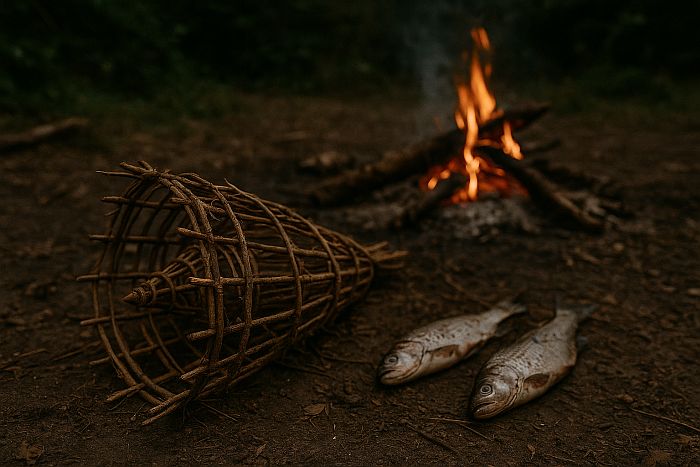
Funnel Traps
Funnel traps use a cone-shaped opening that allows fish to swim in but prevents them from turning around to escape.
Materials You Can Use
- Woven vines
- Branches
- Bark
- Plastic bottles
- Mesh or cloth
Placement
Set them near vegetation, undercut banks, or shallow zones where small fish congregate.
Gill Nets (Improvised)
If you have cordage or fabric, you can create an improvised net with openings sized to entangle fish by their gills.
When to Use
Gill nets are best for streams or choke points where fish regularly pass through.
Important Note
Check nets frequently. Leaving them too long can result in lost fish or damaged gear.
Spearfishing Techniques
Spearfishing demands patience and accuracy, but it’s incredibly effective in clear water.
Making a Survival Spear
A simple spear can be carved from hardwood or bamboo. Split the end to create prongs, then harden the tips over fire.
Stealth and Approach
Move slowly. Fish sense vibration long before they see you. Approach from downstream when possible to avoid alerting them with current displacement.
Aiming Tips
Aim slightly below the fish due to refraction. Water bends light, making fish appear shallower than they truly are.
Building Improvised Fishing Gear
When you lack gear, your creativity becomes your tackle box. You can build surprisingly effective fishing equipment using natural materials and simple tools.
Making Hooks
- Bone
- Wood
- Thorn branches
- Aluminum can tabs
- Metal scraps
- Safety pins
Shape them into a “J” and sharpen the point. A small barb helps keep the fish from slipping off.
Making Cordage
- Paracord inner threads
- Shoelaces
- Plant fibers
- Sinew
- Bark strips
Improvised Floats
Hollow sticks, bark, feathers, or pieces of cork work well as floats.
Survival Fishing With Minimal Tools
Sometimes you have almost nothing. No hooks. No cordage. No tools. There are still ways to catch fish if you have patience and know what to do.
Gorge Hooks
A gorge hook is a straight, sharpened stick tied at the center. The fish swallows it lengthwise, and when you pull the line, it turns sideways and hooks inside the mouth.
Jug or Bottle Fishing
Any floating container can serve as a makeshift jug rig. Tie a line and hook beneath it, bait it, and let the wind or current do the work.
Trotlines
A trotline stretches across a section of water with multiple baited lines hanging from it. This method is extremely productive in ponds and rivers because it fishes multiple zones at once.
Cleaning and Cooking Fish in Survival Situations
Once you catch a fish, you need to prepare it safely and efficiently.
Cleaning Techniques
- Remove scales or skin depending on species
- Cut behind the gills and down the belly
- Remove internal organs
- Rinse the meat in clean water if available
Cooking Methods
In survival scenarios, simplicity wins.
- Roast over fire on a stick
- Cook on hot stones
- Wrap in leaves and bury with coals
- Boil in a makeshift vessel
Cook thoroughly to kill parasites.
Safety Considerations in Survival Fishing
Survival situations already put you at a disadvantage. Don’t make things worse by taking unnecessary risks.
Avoid Overexertion
Fishing is supposed to conserve energy, not burn it. Favor passive methods when possible.
Water Hazards
Stay aware of currents, slippery rocks, and deep sections. An injury near water can become life-threatening fast.
Weather Awareness
Cold water can drain body heat rapidly. Stay dry when possible and avoid overextending into cold water during risky conditions.
Final Thoughts
Survival fishing is equal parts patience, creativity, and understanding how fish behave. Whether you’re improvising a hook from a safety pin, building a weir in a shallow stream, or spearing fish in clear water, these skills help you secure calories when food options are limited. The more methods you practice, the more confident you’ll be in any situation where fishing becomes a necessity.
