
This page may contain affiliate links; you can read our full disclosure.
Most people hit the outdoors thinking about bugs, bears, and bad weather — but plants? Plants are the silent assassins of the woods. They just sit there looking innocent until you brush against the wrong one and suddenly you’re itching, burning, or dealing with a rash that looks like it needs its own insurance policy.
Whether you’re camping, hiking, fishing, or just doing your best “I’m outdoorsy now” impression, knowing the common poisonous plants makes a huge difference. The good news? There aren’t hundreds of them you need to memorize. Just a handful cause the majority of problems, and once you know what they look like, you can avoid them like you avoid that one uncle at Thanksgiving.
Below are five poisonous plants that cause the most trouble for campers and hikers, plus how to identify them, avoid them, and deal with contact if you accidentally touch one.
Poison Ivy
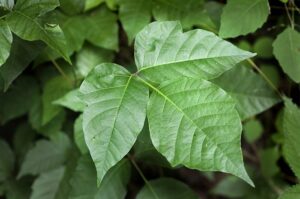
Poison ivy is the celebrity of poisonous plants — the one everyone learns about first, and the one people still manage to walk into anyway.
You’ll find it in forests, fields, along trail edges, climbing trees, draped over fences, and hiding near campsites like it’s waiting to jump-scare someone. The allergic reaction comes from urushiol, an oil that sticks to skin, clothes, and gear.
How to identify it:
- The famous rule: “Leaves of three, let it be.”
- Shiny green leaves that grow in clusters of three
- Can grow like a vine, shrub, or ground cover
- Turns reddish in spring, green in summer, yellow or orange in fall
- Sometimes has little greenish-white berries
What it does:
Red, itchy rash, blisters, swelling, and misery that lasts 1–3 weeks. The oil stays on surfaces, so you can get it from touching gear, pets, or clothing — not just the plant itself.
What to do if you touch it:
- Wash skin with soap and water ASAP (within 30 minutes is ideal)
- Use rubbing alcohol if you have it
- Wash clothing, shoes, and gear that may have touched it
- Apply calamine lotion or hydrocortisone to reduce itching
Avoid scratching, unless you want to look like you fought a bag of angry cats.
Poison Oak
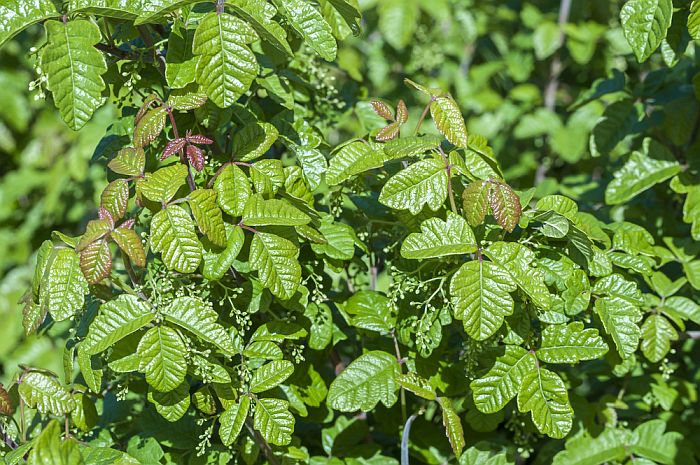
Poison oak is the West Coast cousin of poison ivy — similar attitude, same urushiol oil, equally annoying. It’s especially common in California, Oregon, and Washington, but you can find it scattered across other states too.
It often hides along trails and sunny edges of forests, where hikers brush against it without realizing. Some people mistake the leaves for regular oak leaves, which is why it gets so many victims.
How to identify it:
- Usually grows in clusters of three (occasionally five or seven)
- Leaves have a wavy or lobed oak-like shape
- Can grow as a bush, low shrub, or climbing vine
- Turns red or bronze in the fall
- May have fuzzy green or yellowish berries
What it does:
Same reaction as poison ivy — itching, redness, blisters, and swollen skin. The rash often shows up in streaks where the plant brushed your skin.
What to do if you touch it:
Same treatment as poison ivy: wash thoroughly, treat with lotions, and avoid spreading the oil around camp.
Poison Sumac
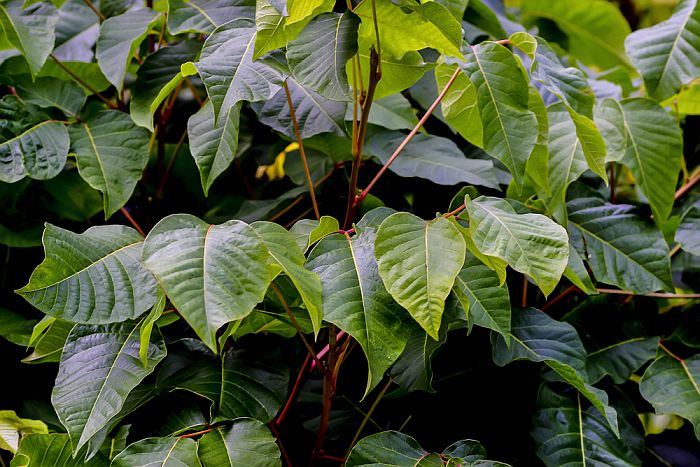
Poison sumac is the big boss of urushiol plants. If poison ivy is annoying, poison sumac is the final boss that actually wants to ruin your month. Luckily, it’s less common for hikers to accidentally touch — it prefers wet, swampy areas, so unless you love slogging through marshes, you’re less likely to encounter it.
Still, it’s good to know what it looks like.
How to identify it:
- Grows as a woody shrub or small tree
- Leaves grow in pairs (not threes), with 7–13 leaflets
- Leaves are smooth-edged, long, and pointed
- Stems are red
- Produces drooping clusters of white or cream-colored berries
What it does:
Poison sumac can cause a more intense rash than ivy or oak, with severe blistering and longer healing times. Some reactions can get serious if you have strong sensitivity.
What to do if you touch it:
Immediate washing, avoid touching anything else, and don’t scratch. If the rash gets severe, swollen, or covers a large area, it may need medical attention.
Stinging Nettle
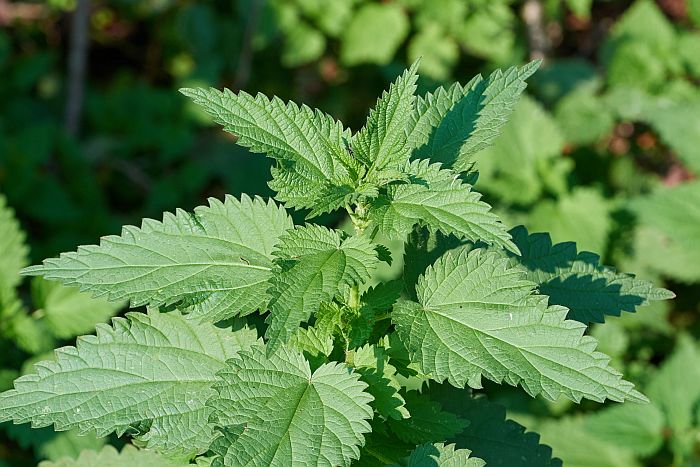
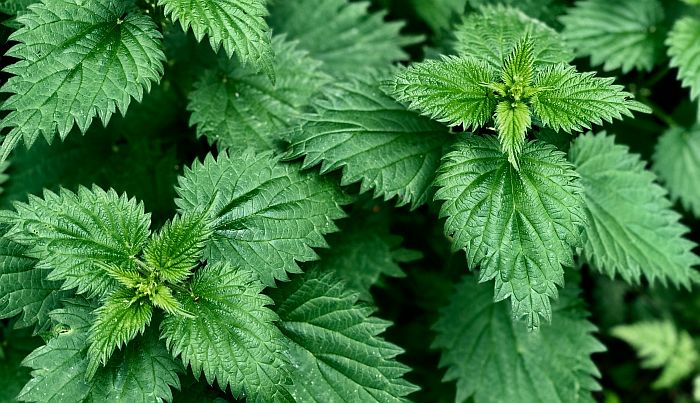
Stinging nettle isn’t technically poisonous in the same sense as ivy or oak, but it deserves a spot on this list because it’s the plant most likely to ruin your camping mood in under one second.
It doesn’t cause a rash from oil — instead, it’s covered in tiny, hair-like needles that inject histamine and formic acid into your skin.
How to identify it:
- Serrated leaf edges that look like little saw teeth
- Leaves are opposite each other on the stem
- Stems often look hairy
- Tall, skinny plant, usually 2–6 feet
- Prefers moist areas, stream banks, and shady forests
What it does:
Instant burning, stinging, tingling, and bumps. Not dangerous, but very uncomfortable for 10 minutes to a few hours.
What to do if you touch it:
- Don’t rub it — that pushes the needles deeper
- Use tape to pull out the tiny hairs
- Apply baking soda paste, aloe, or cool water
- The pain fades on its own
Annoying, but survivable.
Giant Hogweed
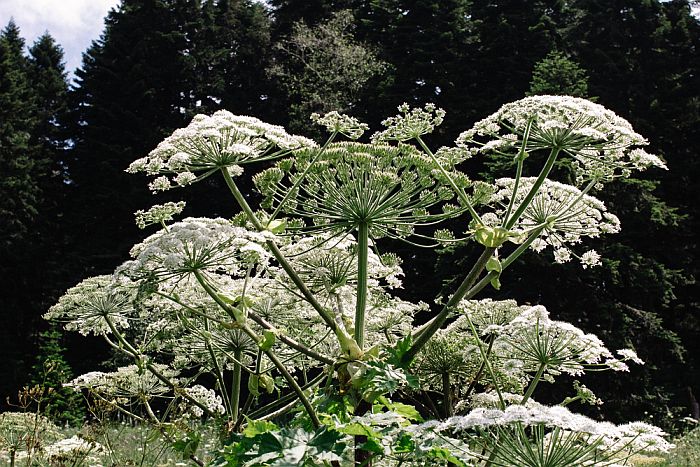
This one is rare but dangerous enough that it deserves a warning. Giant hogweed is a massive plant — up to 14 feet tall — that looks beautiful and innocent until you realize its sap can cause severe burns when exposed to sunlight.
It’s mostly found in the Northeast and upper Midwest, and states actively remove it when it appears.
How to identify it:
- Huge umbrella-shaped clusters of small white flowers
- Thick stems with purple blotches
- Leaves that can get up to 5 feet wide
- A towering height — bigger than most campers
If you see a plant that looks like everything is oversized… don’t touch it.
What it does:
The sap causes phytophotodermatitis, meaning sunlight plus sap equals horrible burns. People have gotten second-degree blisters from it.
What to do if you touch it:
- Wash immediately with cold water and soap
- Keep the area completely out of sunlight for 48 hours
- Seek medical care if blisters form
Avoid it like it owes you money.
How To Avoid Poisonous Plants While Camping
You don’t have to memorize every plant in the forest — just follow a few simple habits and you’ll dodge most problems.
Stay on marked trails
Most contact happens when people cut through brush or walk off the main path.
Check the edges of your campsite
Ivy and oak love the exact same places campers do.
Wear long sleeves and pants in dense vegetation
Fabric is cheap insurance.
Learn the “rule of threes”
If you’re not sure what it is, assume it’s poison ivy or oak.
Teach kids the basics
Kids touch everything. A 60-second lesson can save everyone a headache later.
Wash your hands after gathering firewood
Many poisonous plants climb trees or hide in deadfall.
Keep pets from wandering into brush
Urushiol can cling to fur and transfer to you.
What To Do If You Touch a Poisonous Plant
If you suspect contact, don’t wait for the rash to show up. Act immediately.
- Wash with soap and water
- Use rubbing alcohol if available
- Wash anything that might have brushed the plant
- Apply hydrocortisone, calamine lotion, or cold compresses
- Avoid scratching
- Monitor for swelling or spreading
Most reactions fade on their own, but if you experience swelling around the eyes, rash on a large portion of the body, or signs of infection, you may need medical attention.
Final Thoughts
The outdoors is full of incredible things — but a few plants deserve a healthy “no thanks.” Poison ivy, poison oak, poison sumac, stinging nettle, and giant hogweed are the most common troublemakers, and once you know how to spot them, they’re easy to avoid.
Learn the basic shapes, teach your kids what to watch for, and stick to good camping habits. A little awareness goes a long way, and it keeps your trip focused on fun instead of scratching, burning, or searching for calamine lotion at midnight.
