
This page may contain affiliate links; you can read our full disclosure.
A fire can make or break a night outdoors. It’s warmth, light, security, cooking power, and morale all wrapped into one glowing bundle. You can have the best lighter in the world, but if your tinder is garbage, you’re going to be crouched in the cold muttering threats at a pile of twigs like a lunatic. Good tinder is the real foundation of every reliable campfire, especially when conditions are damp, windy, or cold.
Nature is loaded with excellent tinder sources — some obvious, some surprisingly hidden. Once you know where to look and how to prep each one, fire building becomes less of a chore and more of a guarantee. Here are five of the best natural tinder sources you can find almost anywhere, plus how to actually use them so your fire catches fast instead of struggling along like a dying sparkler.
1. Dry Grass — The Most Common and Most Underrated
Dry grass is everywhere, but most campers overlook it because it doesn’t look impressive. The truth is, it’s one of the fastest-igniting tinders you can gather in the wild. The trick is choosing the right kind: long, dead, straw-colored grass that crumbles in your hands when you crush it. If it bends instead of snaps, it’s too wet.
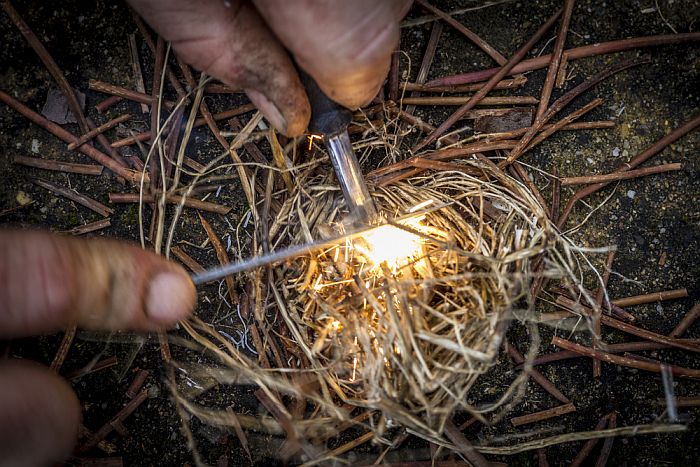
The best way to use dry grass is to twist and fluff it into a loose nest. Too tight and it won’t get oxygen; too loose and it won’t hold a flame. When you get the consistency right — fluffy but slightly bound together — it ignites almost instantly and burns hot enough to catch your small sticks and shavings.
Dry grass is also perfect for layering inside your fire lay. It fills gaps, supports the initial flame, and helps bridge the gap between spark and kindling without drama.
2. Birch Bark — The Fire Starter Nature Gift-Wrapped for You
If you’re lucky enough to be around birch trees, you’re basically walking through a natural lighter-fluid farm. Birch bark is loaded with oils that burn hot even when the bark is damp. The outer bark curls, peels, and catches a spark far more easily than most natural materials.
The key is to never peel bark from a living tree — only grab what’s already loose or fallen. A few thin curls are enough to ignite with even a weak flame or spark. Once lit, birch bark burns with an intensity that feels almost unfair compared to other natural tinders.
It’s also one of the best materials for wet-weather fire building. Even when everything else around you looks like a soaked sponge, birch bark gives you a fighting chance.
3. Fatwood — Nature’s Gasoline Stick
Fatwood comes from the resin-rich sections of pine stumps and fallen branches. When a pine tree dies or gets damaged, the resin pulls into the wood grain and hardens inside it, creating an incredibly flammable material. You’ll know you found fatwood when you split a piece and smell that strong pine scent. The wood will be darker, denser, and often sticky with resin.
Shave off curls with a knife and they’ll ignite fast, even in rain or humidity. Fatwood burns longer and hotter than dry grass or bark, which gives your small kindling time to catch. A couple good shavings can replace whole handfuls of weaker tinder materials.
A survival knife with a sharp spine makes shaving fatwood dramatically easier. The sharper the edge, the cleaner the curls — and the faster your fire takes off. A reliable knife isn’t luxury here; it’s efficiency, warmth, and safety rolled into one.
4. Cattail Fluff — The Softest Tinder With the Fastest Ignition
If you’re camping near wetlands, ponds, or marshy areas, cattails are one of the best natural tinders available. Their fluffy seed heads ignite with a single spark — sometimes too quickly. Cattail fluff burns extremely fast, so you need to pair it with another tinder or small shavings that will continue burning after the initial flash.
One trick is to mix the fluff with dry grass or small bark shavings to slow the burn slightly. The fluff catches first, then lights the supporting material, and finally pushes the flame into your kindling.
It’s light, abundant, and effective in almost every environment except after heavy rain, when the fluff can clump. Even then, a small dry pocket inside the head often survives just enough to light.
5. Punk Wood — The Slow Burner That Holds a Coal
Punk wood is old, rotted wood that feels spongy or soft when you press into it. It’s not moldy or wet — just decomposed enough to be airy and light. When dried, punk wood can catch a spark, hold a smoldering ember, and slowly grow it into a coal. That makes it one of the best tinders for spark-based fire building.
It doesn’t ignite as explosively as dry grass or fluff, but once it gets going, it acts like a slow, reliable fuse. You can tuck it into your tinder nest to stabilize the flame and buy yourself time to feed the fire.
Punk wood also makes excellent material for charring if you ever want to create char cloth alternatives for long-term fire-starting skills.
When to Combine Tinder Types
The magic really happens when you combine fast-igniting material with slow-burning support. For example:
- Dry grass or cattail fluff starts the flame.
- Birch bark or fatwood carries it upward.
- Punk wood stabilizes it if you’re working with sparks instead of a lighter.
Most people fail at fire building because they try to light kindling directly. Tinder is the bridge, and mixing types often guarantees success in sketchy weather.
How Moisture Affects Natural Tinder
Moisture ruins weak tinder, but some natural materials push through anyway. Birch bark, fatwood, and punk wood often survive light rain or high humidity because oils and resin repel water. Dry grass and cattails don’t — so always gather those earlier in the day when the sun has had time to dry them out.
A quick hack: keep a small bag of bone-dry tinder inside your pack. Even with natural sources around, having a backup stash gives you instant fire when everything looks soggy.
A windproof camping lighter. You can still start a fire with sparks or matches, but a lighter that functions in cold wind turns a frustrating fire-starting session into a quick win. You don’t need anything fancy — just something that stays lit in conditions where ordinary lighters tap out.
Final Thoughts
Natural tinder is everywhere once you learn how to see it. Dry grass ignites fast and fills your nest. Birch bark burns hot even when damp. Fatwood delivers long, resin-fueled heat. Cattail fluff catches a spark instantly. Punk wood holds embers and grows them into coals.
Combine these materials and you turn the outdoors into a full fire-starting toolkit. Add a dependable blade for shaving fatwood and a windproof lighter for convenience, and fire becomes something you can build confidently in almost any weather. Once you master tinder, everything else about starting a fire becomes simple — and your nights outdoors get a whole lot warmer.
