
This page may contain affiliate links; you can read our full disclosure.
If you camp in cold weather, heat a cabin, or rely on a kerosene heater during winter outages, then you already know the golden rule: you only run out of fuel when it’s inconvenient. Because diesel is easier to find than kerosene — and often cheaper — it’s natural to wonder whether you can just pour diesel in and keep things running.
The short answer?
A kerosene heater can burn diesel, but it won’t burn it well, it may damage the heater, and it dramatically increases fumes and carbon monoxide risk.
People do it, especially in emergencies. But there’s a big difference between “possible” and “recommended.”
The Key Difference Between Diesel and Kerosene
Kerosene and diesel come from the same distillation family, so it’s not outrageous to think they’re interchangeable. Both are petroleum fuels. Both ignite through vaporization. Both can burn in wick-style heaters.
But the differences matter.
Kerosene burns cleaner
Kerosene is refined to burn with less odor, less soot, and fewer byproducts. That’s why it’s used in indoor heaters — it doesn’t smoke you out of the room.
Diesel is heavier and oilier
Diesel has more impurities, more sulfur (unless you’re using ULSD), and a significantly higher flash point. It vaporizes slower, burns dirtier, and releases more fumes.
Diesel produces more carbon monoxide
This is the main safety issue. A heater designed for kerosene expects a clean burn. Diesel throws off more particulates and gases, and incomplete combustion increases CO output.
Diesel clogs wicks faster
That oily residue doesn’t just burn — it builds up fast. A wick that’s supposed to last a full season can become gummy and unusable in a few burn sessions.
So while the fuels are chemically related, they’re not designed to perform the same way in household or camping heaters.
So… Can You Actually Burn Diesel in a Kerosene Heater?
Yes — the heater will ignite and run.
No — it will not run cleanly, efficiently, or safely.
Here’s what usually happens if someone pours diesel into a kerosene heater:
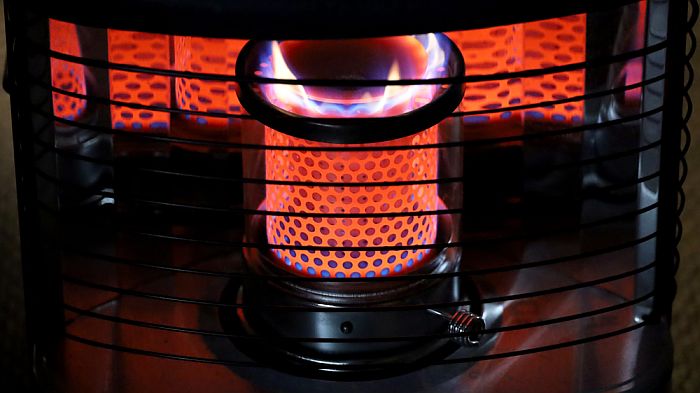
- the flame burns yellow instead of blue
- soot forms on the heater and nearby surfaces
- the smell is strong and unpleasant
- fumes irritate your throat and eyes
- the wick darkens and hardens
- the heater loses efficiency quickly
People who try it often describe it as “it works, but I won’t do that again unless it’s an emergency.”
Times When Diesel in a Kerosene Heater Is Used
Sometimes campers, off-grid folks, and homesteaders do run diesel in kerosene heaters — but overwhelmingly in ventilated outdoor setups, like:
- work sheds with open airflow
- garage/workshop spaces
- large barns
- outdoors under a shelter
- hunting structures
Even then, most people switch back to kerosene the moment they can.
The idea of using diesel indoors is where the risk spikes.
Why Burning Diesel Indoors Is a Bad Idea
You can get away with a lot outdoors because smoke and fumes dissipate. Indoors? Different story.
Here’s why diesel is a problem inside living spaces:
Diesel produces more carbon monoxide
Even small increases in CO inside a tent, cabin, RV, or home can be deadly. A heater burning diesel can spike CO levels far faster than kerosene.
Diesel emits harsher fumes and sulfur smell
Your heater will smell like a tractor exhaust pipe warmed up for supper. Not a great vibe for indoor camping.
Diesel creates soot buildup
Black residue forms on the heater and can blow into the air — which you then breathe. It’s a respiratory irritant.
Diesel vaporizes poorly
This causes incomplete combustion, which leads to unstable flame behavior and more pollutants.
All manufacturers agree on one thing:
If your heater is designed for kerosene, diesel is not an approved fuel.
What Happens to the Heater If You Run Diesel?
Beyond the air quality issues, diesel is rough on the unit itself.
The wick dies young
Diesel carbonizes the wick much faster. It becomes rigid, gummed up, and won’t draw fuel evenly.
Fuel flow becomes inconsistent
Diesel’s thicker viscosity disrupts the capillary action the heater is designed to use.
The heater soots up
Soot coats the combustion chamber, reducing heat output and increasing dangerous residues.
The flame height becomes unpredictable
You’ll be constantly adjusting the wick, trying to control flickering or overly tall flames.
Repairing or replacing internal parts can cost more than the heater itself.
Emergency Situations: When Diesel Might Be the Only Option
Let’s be real. If it’s 20°F, you’re in a power outage, and diesel is the only fuel you’ve got, then yes — it’s better to have heat than not have heat.
But if you must do it:
- Ventilate the space heavily
- Keep a window cracked plus cross-ventilation
- Use a CO detector (mandatory)
- Expect soot and odor
- Clean the heater afterward
- Replace the wick sooner than normal
This is emergency-only protocol, not regular practice.
Is There a Better Substitute Than Diesel?
Yes — a much better one:
K-1 Kerosene Alternatives
Clear lamp oil (paraffin oil)
– burns very clean
– a good indoor-safe emergency substitute
– expensive, but safe
No. 1 Fuel Oil (No. 1 Heating Oil)
– closer to kerosene than diesel
– burns cleaner
– still not ideal indoors
Jet-A Fuel (rare but chemically close to kerosene)
– extremely similar to kerosene
– not something most campers have access to
White gas?
Huge NO. Totally different fuel. Dangerous in wick heaters.
When in doubt, stick to kerosene or a kerosene-grade substitute, not diesel.
Should You Ever Use Diesel on Camping Trips?
If you’re heating a tent or enclosed shelter:
Absolutely not.
Diesel’s fumes and CO output are dangerous in small spaces.
If you’re heating an outdoor cooking or gathering area:
You could, but you’ll get smoke and smell.
If you’re heating a well-ventilated cabin or shed:
Possible, but unpleasant and not great for the heater.
For camping safety, diesel is one of the last fuels you should consider using in a kerosene heater.
The Bottom Line
Can diesel run in a kerosene heater?
Yes — mechanically it works.
Should you use diesel?
Not unless it’s an emergency or you’re outdoors with plenty of ventilation.
Diesel burns dirtier, smells harsher, clogs wicks faster, and produces significantly more fumes and carbon monoxide than kerosene. It shortens the heater’s lifespan and increases the risk of indoor air contamination.
Stick with real kerosene whenever possible. Treat diesel as a last-resort fuel, not a routine substitute.
