
Understanding Waterproof Ratings (and Why They Matter)
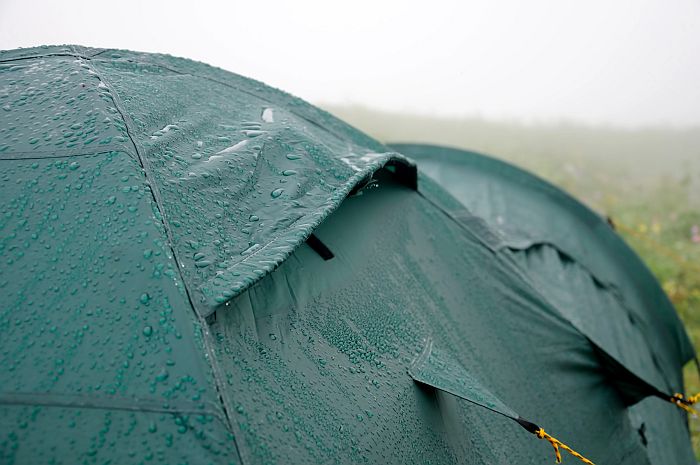
Tent waterproof ratings are measured in millimeters (mm) using a hydrostatic head test—basically how tall a column of water the fabric can hold back before it leaks. Higher number = higher pressure resistance. If you’ve ever had a tent start misting or dripping in a storm, that’s your waterproof rating tapping out.
This page may contain affiliate links; you can read our full disclosure.
The Sweet Spot for Most Campers: 1,500–3,000 mm
For three-season camping with the usual mix of light-to-moderate rain, the ideal waterproof rating is 1,500–3,000 mm. In this range, fabrics handle real-world rain well—assuming the tent is pitched correctly and the seams are taped.
A 1,500 mm rainfly handles steady rain; 2,000–3,000 mm holds up to wind-driven storms and long soakings. Most solid camping tents fall right in this range.
When You Need More: 3,000–5,000 mm
If you camp where storms are frequent, long, or aggressive—think the Pacific Northwest, mountains, or anywhere that rains sideways—look for 3,000–5,000 mm. You’ll see these numbers on higher-performance and some backpacking tents. It’s not invincible, but it does give you insurance when the sky decides to get dramatic.
Brands like Coleman, Marmot, REI, and Big Agnes often use ratings in this zone because it balances protection, durability, and weight.
Anything Above 5,000 mm: Specialized Territory
Once you cross 5,000 mm, you’re in the land of expedition gear and heavy-duty tarps—stuff built for mountaineering, winter storms, and relentless multi-day rain. Totally unnecessary for the average camper unless you enjoy suffering recreationally.
Higher ratings aren’t “bad,” they just come with trade-offs: heavier fabric, less breathability, higher cost.
Don’t Forget the Floor Rating
The tent floor takes the most abuse, which is why it deserves the highest rating. Knees, elbows, sleeping pads, and gear create pressure that forces water through fabric faster than rainfall ever would. That’s why floors are usually 3,000–10,000 mm.
A 5,000 mm floor is excellent for normal use; anything above that is bonus insurance unless you’re camping on soaked ground.
Seam Taping: The Hidden Hero
Even the best fabric will leak if the seams aren’t sealed. Quality tents have factory-taped or welded seams. Cheaper tents often skip this part, which is why people get soaked despite “impressive” fabric numbers.
Real Talk: Ratings Aren’t Everything
A well-designed tent with a 2,000 mm fly can outperform a poorly designed tent with a 5,000 mm fly. Pole structure, ventilation, fly coverage, seam construction, and how well you pitch the tent all matter just as much as the number on the box.
A tent with modest ratings but strong design can shrug off storms; a tent with huge numbers and sloppy engineering will betray you the first time the wind picks up.
The Simple Answer
For most campers, the sweet spot is:
- 1,500–3,000 mm for the rainfly
- 3,000–5,000+ mm for the floor
Stick to those numbers and you’ll stay dry without spending expedition-level money on gear you’ll never actually need.