
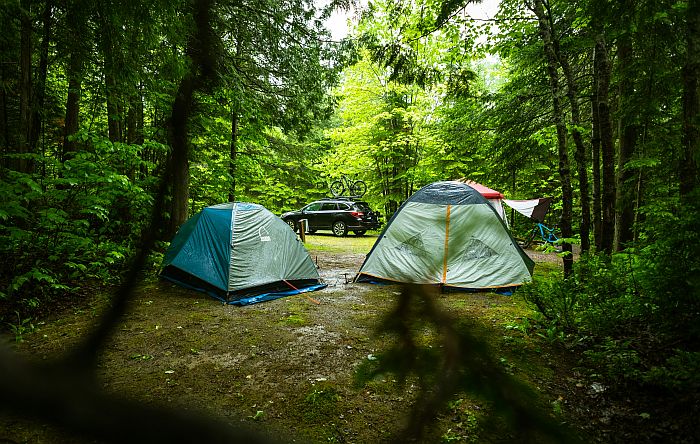
Most people picture the outdoors as a place where everyone is trustworthy and relaxed — and most of the time, that’s true. But campgrounds, trailheads, and dispersed sites attract a wide range of visitors, and not all of them show up with good intentions. Theft at campsites happens quietly and quickly. Someone walking through a campground with a backpack or a hoodie rarely draws attention, and opportunistic thieves take advantage of that. They’re not planning a heist — they’re grabbing whatever looks easy: coolers, phones, jackets, wallets, lanterns, even camping stoves.
This page may contain affiliate links; you can read our full disclosure.
The trick to preventing theft isn’t building a fortress — it’s removing the “easy” factor. Theft is almost always about convenience. If stealing from you looks like work, thieves usually move on to the next site. Securing your campsite is about making your stuff the least attractive target.
Start by Choosing a Campsite That Naturally Discourages Theft
The very first security step happens before you unload the car. Your campsite’s location has a huge impact on how vulnerable you are. Sites near high-traffic walkways, entrances, or public areas tend to attract more wandering visitors — and among them, the occasional thief. A tucked-away site reduces foot traffic and lowers the odds of someone casually eyeing your gear.
Visibility works both ways. You want a spot where you can see who’s approaching, but they can’t easily see what you’ve set out. Campsites with trees, boulders, or natural separation from adjoining sites help conceal gear without putting you in total isolation. A site that feels open enough to observe but closed enough to hide valuables is the sweet spot.
Lock Up the Expensive Stuff — Even if You’re Just Stepping Away
People often treat campsites like a living room. They leave phones on picnic tables, wallets under hoodies, and car keys beside camp chairs. In a campground with dozens or hundreds of people, that’s a gamble. Anything valuable should be secured every time you walk away, even if it’s for ten minutes.
The simplest solution is using your car as a safe. Cars lock, they’re hard to break into without making noise, and thieves don’t want attention. Most campground thefts happen because expensive items are sitting in plain view, not because someone wants to break into vehicles. Even a cheap lockbox under a seat is enough to deter most opportunists.
Keep Gear Spread Out, Not Piled in a Single Easy Grab
Camp thieves love “grab-and-go” setups — one table loaded with everything valuable. If someone can swipe a cooler, a backpack, and a speaker in one pass, your site becomes a jackpot. Spreading gear out forces a thief to linger or make multiple trips, which dramatically increases the chance of getting noticed. They hate that.
Stuff you don’t need should go back in the car. Stuff you’re using should be spaced out naturally — a cooler near the fire pit, cooking gear near the table, clothing closer to the tent. Separation alone makes theft harder.
Use Simple Cable Locks on High-Value Outdoor Gear
For items too big for the car but too valuable to leave unsecured, a lightweight cable lock is enough to stop 99% of campsite thieves. Camp chairs, bikes, kayaks, paddleboards, generators, coolers, and bike racks can all be secured to a picnic table, a tree, or the vehicle frame.
No thief wants to be seen bending over a cable lock with bolt cutters in a quiet campground. Even a basic lock creates more effort and attention than they’re willing to risk. It’s not about making the item impenetrable — it’s about making it inconvenient.
Keep Your Tent Unattractive to Thieves
A lot of campers assume their tent is safe because it zips closed. Unfortunately, anyone who wants to get inside a tent can do it in seconds. Fabric isn’t protection — it’s a suggestion. The goal isn’t to secure the tent itself, but to make the inside of your tent unappealing.
Never leave wallets, phones, purses, or electronics in a tent while you’re gone. Even sleeping bags and clothing can be tempting if they look brand new or expensive. Your tent should contain items you can afford to lose or things with no resale value.
Another underrated trick: keep your tent clean and uncluttered. A messy tent looks like it might contain valuables. A tidy tent looks empty and uninteresting.
Build Natural Awareness Without Becoming “That Camper”
You don’t need to patrol your site like a mall cop — but a little strategic awareness discourages thieves. Saying hello to people who walk near your site is surprisingly effective. Thieves don’t like being acknowledged. It tells them you have a good memory for faces.
Recognizing the campers next to you and having a brief chat also creates a friendly, watchful environment. When your neighbors know you, they’re more likely to notice if someone strange is poking around your gear while you’re gone. Community awareness is a powerful security tool.
Light Your Campsite in a Way That Discourages Sneaking
Darkness is an ally for thieves. A well-placed lantern or low-power campsite light reduces hiding spots and makes it obvious if someone is lingering near your gear. You don’t need floodlights — just modest illumination that keeps the area visible enough for people to be aware of movement.
Motion-activated lights can help, but they’re not necessary. Even a small solar lantern left glowing in the open keeps your site from looking abandoned or easy to approach unnoticed.
Don’t Advertise That You’re Away
If you’re leaving to hike, fish, or explore for a while, avoid leaving your site looking deserted. A thief scanning the campground is looking for a site where nobody will return soon. Small touches — a chair tucked by the fire pit, a towel draped over the table, or a lantern left on low — create the impression that someone is around.
What you don’t want is a bare site with everything stripped and the fire cold. That screams, “We won’t be back for hours.” Leave your site looking lived-in.
Manage Food and Coolers Like They’re Cash
Coolers are some of the most commonly stolen items because they’re easy to grab, they often contain portable valuables, and they’re expensive themselves. Strangely, campers treat coolers like benign gear instead of the treasure chests they are. When you leave the site, secure the cooler inside the car or use a cable lock.
If you’re in bear country, food must go into a bear box anyway, but even in non-bear areas, treat your cooler like an item worth protecting. Because it is.
Electronics Are the Biggest Targets
Portable speakers, power banks, cameras, GPS units, phones, and tablets attract more thieves than tents and sleeping bags ever will. These items should go into your car or a locked container every single time you walk away.
If you must leave something charging at a campsite plug-in post, stay nearby or use a small lockbox cable-secured to a bench. Charging stations at campgrounds are prime hunting grounds for opportunistic theft.
Understand That Thieves Look for “Fast,” Not “Valuable”
A thief in the woods doesn’t want a confrontation and doesn’t want to be caught carrying gear through a campground. They’re scanning for items that can be grabbed in two seconds and disappear into a backpack. When you understand this, everything about campsite security becomes easier.
If something takes time to steal — unplugging, untangling, unlocking — it becomes a bad target. Your job isn’t to create impenetrable security. Your job is to ruin the thief’s timeline.
When Dispersed Camping, Add Extra Layers of Security
Theft is less common in remote backcountry settings, but when it happens, it’s usually more severe because sites are isolated. Extra steps go a long way: keeping valuable items in the tent with you at night, storing gear under bushes or behind logs where it isn’t visible, and choosing sites where approaching strangers must walk directly into your line of sight.
Simply hiding your gear, even in plain sight behind trees or rocks, makes theft far less likely. Thieves want the easiest possible score — not a scavenger hunt.
The Bottom Line
Securing a campsite from theft isn’t about paranoia. It’s about being realistic. Campsites bring together hundreds of strangers, and leaving valuables lying around is an invitation to the wrong kind of visitor. Choose a smart site with natural cover, keep valuables locked away, use small cable locks when appropriate, maintain a lived-in appearance, and build awareness with your neighbors.
When you make your gear harder to steal than the next campsite’s, you win. Thieves look for convenience — remove that, and your stuff stays exactly where you left it.