
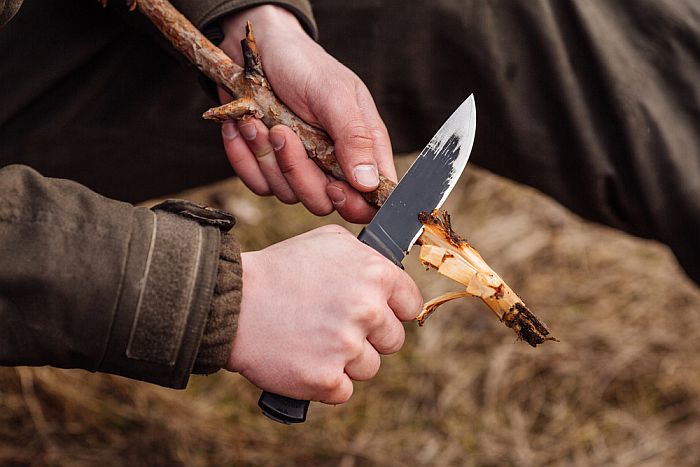
A knife is the single most important tool you can carry in the outdoors. It’s not about being flashy or “tactical.” It’s about solving real problems: fire, food, shelter, and repairs. When you know how to use a knife properly, one tool can replace a whole bag of gear.
This page may contain affiliate links; you can read our full disclosure.
Below are five knife skills every outdoorsman should understand before heading into the woods — not theory, but practical use.
1. Cutting and Processing Wood
Most outdoor knife work involves shaping small pieces of wood, not cutting down trees. Your knife helps you turn sticks and branches into tools, fire materials, and shelter components.
Feather sticks: Hold a dry stick firmly against the ground or a log. Using a shallow angle, pull the knife toward you while shaving thin curls without cutting them off. These curls ignite easily and burn longer than loose tinder.
Batoning small wood: With a full-tang fixed blade, place the knife edge on top of a small log and strike the spine with another stick to split it. This exposes dry inner wood when the outside is wet. Never baton with a folding knife.
Shaping stakes and pegs: Use controlled push cuts to taper the end of a stick. You don’t need a razor point — just enough angle to drive it into the ground without splitting.
Proper wood processing saves time, energy, and frustration when conditions aren’t ideal.
2. Fire-Starting Support
A knife doesn’t create fire by itself — it creates the materials fire depends on.
Creating tinder: Scrape dry bark, fatwood, or inner wood fibers into fine shavings. Thin, fluffy material catches sparks faster than chunks.
Exposing dry wood: Split damp branches lengthwise to access the dry core. Inner wood lights far more easily than anything exposed to rain or dew.
Using a ferro rod: Use the spine of your knife, not the edge. Hold the knife steady and pull the rod back firmly so sparks fall directly into your tinder pile. This method gives better control and reduces injury risk.
Without proper knife prep, even the best fire starter struggles.
3. Preparing Food
Food prep is where good knife skills conserve calories and poor technique wastes them.
Fish processing: Make shallow, controlled cuts. Slice behind the gills to gut the fish, then open the belly carefully to avoid puncturing organs. For filleting, keep the blade flat against the bones and let the knife glide rather than saw.
Small game: Skinning animals like rabbits or squirrels is about separating hide from muscle, not hacking meat. Short cuts and patience produce cleaner results.
Plant and foraged foods: A knife helps split roots, open nuts, trim edible greens, and remove tough or bitter outer layers. Clean cuts reduce waste and contamination.
Efficient food prep means better nutrition and less mess.
4. Building and Repairing Shelter
Shelter protects you from wind, rain, and cold — and a knife makes shelter faster and more reliable.
Notching joints: Simple V-notches or square notches help logs lock together instead of sliding. Make multiple light cuts rather than forcing the blade.
Cutting supports: Measure before cutting. It’s easier to shorten a stick than fix one that’s too short. Clean cuts prevent splitting and weakness.
Tarp and emergency shelters: A knife lets you cut cordage, shape stakes, trim poles, and fine-tune tension points so your shelter stays put in bad weather.
Well-shaped materials mean fewer leaks and less movement in wind.
5. Making Tools and Improvised Gear
This is where a knife becomes a force multiplier.
With basic carving and shaping, you can make:
- Cooking skewers and roasting sticks
- Fishing gigs by splitting and hardening stick tips
- Pot hangers using simple notches
- Cordage from bark, roots, or plant fibers
You’re not crafting artwork — you’re making functional tools that solve immediate problems.
Knife Safety Basics
- Always cut away from your body
- Keep your blade sharp — dull knives slip
- Use stable surfaces, not your leg or hand
- Never baton with a folding knife
- Know local laws before practicing trapping or hunting skills
Final Thoughts
A knife isn’t about looking prepared — it’s about being prepared. When you understand how to process wood, support fire, prepare food, build shelter, and improvise tools, one blade replaces a pile of gear.
Practice these skills safely and deliberately. When conditions turn bad, your knife won’t save you — your skill with it will.