
This page may contain affiliate links; you can read our full disclosure.
Tent camping for beginners doesn’t need to feel like prepping for a survival show. You’re not trying to outsmart the wilderness or wrestle a bear for dominance. You just need the right place to sleep, the right gear, and a basic understanding of how not to screw up the simplest parts of being outside.
Once you learn the fundamentals, camping becomes cheap, relaxing, and downright addictive. This guide gives you everything you actually need to know — without drowning you in useless trivia.
Where New Campers Should Actually Go
Your first camping trip should not be a heroic expedition into the deep woods where GPS signals fear to tread. Start simple.
Public Campgrounds (The Smart Choice)
State and national parks were practically built for beginners. You’ll get:
- Bathrooms you don’t need a tetanus shot to use
- Potable water
- Fire rings
- Picnic tables
- Trash bins
- Clearly numbered campsites
Some even have electric hookups if you need to charge a phone or power a coffee maker like a civilized adult.
Private Campgrounds (Camping With Training Wheels)
- Showers
- Wi-Fi
- Laundry
- Camp stores
- Sometimes even pools
Yes, it’s “glamping lite,” but your first trip should be enjoyable, not traumatic.
Dispersed Camping (Not Today, Big Boy)
Zero facilities. Zero structure. Zero mercy. Great once you know what you’re doing — not your starting point.
Beginner Camping Gear That Actually Matters
Ignore influencer packing lists with 47 gadgets. You need the basics.
Your Sleep Setup
- A tent with a rainfly
- A ground tarp or footprint
- A sleeping bag rated colder than expected temps
- A sleeping pad or air mattress (insulation matters)
Cooking & Food Gear
- Camp stove or fire-safe cookware
- Lighter or matches
- Cooler with ice
- Water jugs
- Simple cookware kit
Lighting & Essentials
- Headlamp
- First aid kit
- Insect repellent
- Sunscreen
- Multi-tool
- Trash bags
Clothes
Think comfort and layers, not Instagram fashion. Pack extra socks.
How to Pick and Set Up a Campsite Like You Know What You’re Doing
Choose Smart Ground
- Elevated and flat is good
- Low and bowl-shaped is where water collects
Look Up
Avoid dead branches (“widowmakers”). They fall without warning.
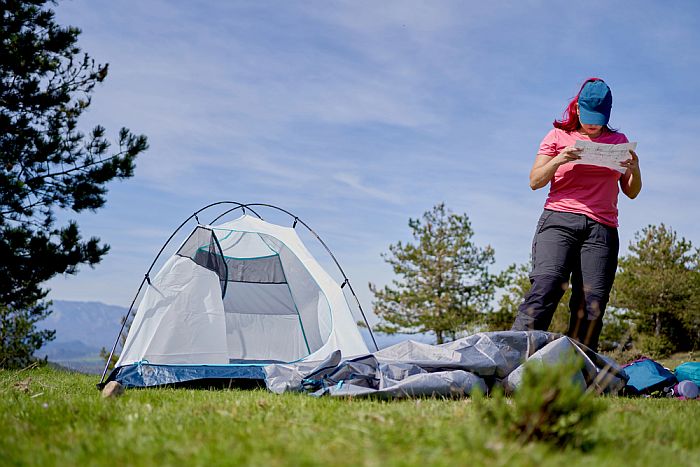
Tent Placement
- Door away from wind
- Rainfly always on
- Stake at proper angles
- Keep cooking and sleeping areas separate
Campground Rules You Shouldn’t Ignore
- Quiet hours
- Leash rules
- Fire restrictions
- Trash guidelines
- Check-in and check-out times
Campfire Basics: Don’t Burn the Place Down
- Use established fire rings
- Keep fires small
- Use local firewood
- Never leave a fire unattended
- Drown, stir, drown again
If the ashes aren’t cold, the fire isn’t out.
Wildlife 101 for New Campers
- Store food in your car or bear box
- Clean up immediately after meals
- Seal all trash
- Never feed wildlife
Dealing With Bugs Without Losing Your Sanity
- Use effective repellent
- Keep the tent zipped
- Avoid stagnant water
- Wear long sleeves during peak bug hours
Sleeping Well in a Tent (Yes, It’s Possible)
- Use a sleeping pad
- Bring a real pillow
- Match sleeping bag to temperatures
- Use earplugs if needed
- Keep food out of the tent
Cooking Easy Meals That Don’t Suck
- Hot dogs
- Burgers
- Foil meals
- Oatmeal
- Sandwiches
- Coffee
Leave Your Campsite Better Than You Found It
Pack out everything. Double-check fires are cold. Respect the land or lose access to it.
Final Word
Camping isn’t complicated. Learn the basics, unplug, and give it a shot. After one trip, you’ll wonder why you waited so long.
Respect the rules. Don’t feed the raccoons. Welcome to the outdoors.
