
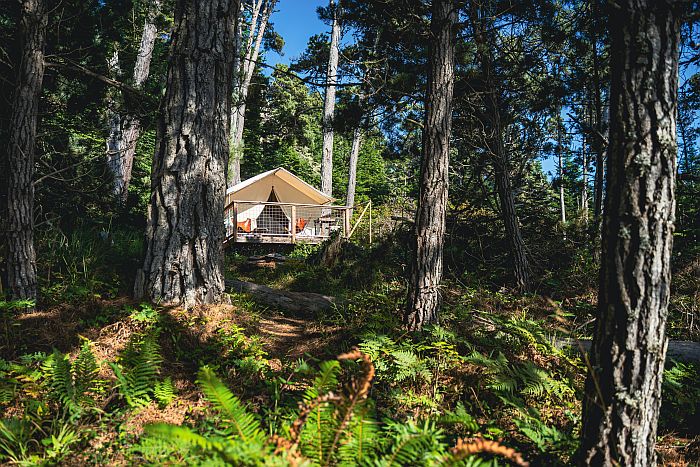
Camping is sleeping outside and hoping a raccoon doesn’t unzip your tent. Glamping is sleeping outside but with electricity, memory foam, string lights, and a fridge full of snacks you didn’t have to haul. Same outdoors, wildly different experiences. Here’s how the two compare without sugarcoating a single thing.
This page may contain affiliate links; you can read our full disclosure.
What Camping Actually Is
Camping is the original, no-frills outdoor experience. You pack your gear, pitch your tent, build a fire, cook your own meals, and handle whatever nature throws at you. It’s raw, simple, quiet, and occasionally uncomfortable — because that’s kind of the point.
Real camping forces you to slow down, unplug, and live without every convenience you take for granted. You boil water for coffee, you sleep on the ground, and you earn every ounce of comfort you get.
What Glamping Actually Is
Glamping is “camping” for people who want nature but don’t want to suffer. It mixes outdoor scenery with indoor comfort, meaning heated tents, plush beds, private bathrooms, rugs, lanterns, running water, and sometimes even air conditioning.
It’s for anyone who loves the idea of being outdoors but doesn’t love bugs, sleeping pads, cold mornings, or the part where your back fuses with the earth.
Comfort Level: Roughing It vs Relaxing In It
Traditional camping tests your tolerance for discomfort — sleeping bags, chilly mornings, damp clothes, uneven ground, and noises outside your tent that convince you a bear is filing paperwork right next to your head.
Glamping isn’t like that. It’s built specifically to avoid misery. You get soft beds, cushions, climate control, and furniture. You wake up refreshed instead of waking up wondering which vertebrae broke in your sleep.
Camping builds character.
Glamping builds Instagram posts.
Shelter Types: Tent vs Luxury Tent
Camping shelters are pretty straightforward: small nylon tents, bigger family tents, hammocks, or maybe a tarp if you’re feeling rugged.
Glamping shelters, on the other hand, are often massive canvas tents, safari-style lodges, yurts, treehouses, geodesic domes, or cabins dressed up like high-end hotel rooms. They’re often tall enough to stand in, decorated like a boutique apartment, and insulated like a cozy tiny home.
Camping is “I hope this tent doesn’t leak.”
Glamping is “This tent has a chandelier.”
Sleeping Arrangements: Ground vs Mattress
Camping means sleeping bags, foam pads, maybe an inflatable pad if you splurged. Comfort is optional, not guaranteed.
Glamping gives you full beds — not “camp beds,” but actual beds. Mattresses, sheets, pillows, blankets, the whole deal. You’re basically sleeping in a bedroom that just happens to have canvas walls.
Camping is survival sleep.
Glamping is spa sleep.
Food Experience: Cooking vs Being Served
Camping meals take effort. You start the fire, manage the heat, cook in foil or cast iron, and clean up with cold water and a prayer.
Glamping lets you bring real food, real cookware, and sometimes gives you full kitchens. At some glamping resorts, you don’t cook at all. Meals are delivered. You eat steak and eggs while sitting in a canvas palace.
Camping food tastes great because you worked for it.
Glamping food tastes great because someone else worked for it.
Gear Requirements: Bring Everything vs Bring Yourself
Camping requires gear — tent, sleeping bag, pad, stove, cooler, lantern, tools, and enough snacks to feed an army. If you forget something, you improvise or suffer.
Glamping requires you to bring clothes and maybe a toothbrush. Everything else is provided. You’re basically checking into a hotel with birds chirping outside.
Camping is a gear sport.
Glamping is a suitcase sport.
Weather Tolerance: Deal With It vs Dodge It
In camping, you deal with the weather you get. Rain? You’re wet. Wind? You’re flapping. Cold? You layer up and hope your sleeping bag wasn’t overhyped.
Glamping gives you shelter that actually fights back — insulated walls, heating, cooling, thicker materials, and structural support that doesn’t fold if it sneezes wrong.
Camping builds toughness.
Glamping builds comfort.
Bathrooms: Nature vs Private Facilities
Let’s be honest: bathroom differences alone can decide which team you’re on.
Camping bathrooms range from “dig a hole” to “shared camp restroom.”
Glamping bathrooms range from private toilets to full showers with running water.
Camping is humble.
Glamping is civilized.
Who Camping Is Best For
Camping fits people who want simplicity, adventure, and self-sufficiency. It’s perfect for hikers, outdoor enthusiasts, budget travelers, families who like to unplug, and anyone who appreciates nature without expecting luxury.
It’s also for people who don’t mind a bit of dirt, sweat, and chaos — because camping is all three.
Who Glamping Is Best For
Glamping fits people who want nature without discomfort. Great for couples, first-time campers, people celebrating special occasions, or anyone who wants to relax outside without sacrificing sleep or modern amenities.
It’s also perfect for adults who say, “I love nature, but I’m not living like a raccoon.”
Cost Differences: Cheap vs Treat
Camping is one of the most affordable vacations you can take. Campsites are cheap, gear lasts for years, and meals are DIY.
Glamping costs more — sometimes much more. You’re paying for comfort, structure, privacy, and “wow” factor.
Camping is a budget-friendly escape.
Glamping is a luxury experience.
The Real Difference
Camping is about simplicity.
Glamping is about comfort.
Camping gives you dirt, fire, stars, and independence.
Glamping gives you warmth, style, and zero suffering.
Both get you into nature — they just serve two very different personalities.
Final Thoughts
Glamping and camping aren’t opposites — they’re two paths to the outdoors. One delivers challenge, simplicity, and rugged charm. The other delivers relaxation, luxury, and comfort with a view. Whether you want to rough it or pamper yourself under the stars, both experiences create memories. The only wrong choice is staying home.