
This page may contain affiliate links; you can read our full disclosure.
Coffee at home tastes fine. Coffee on a campfire? It’s practically a religious experience. Something about the smoke, the morning chill, the quiet of the woods, and that first sip makes it hit harder than anything brewed in a kitchen. But campfire coffee also has a reputation for being bitter, gritty, or straight-up sludge because a lot of people make it wrong.
If you know a few simple methods — and understand how heat works over a fire — you can make coffee that rivals anything you drink at home. Campfire coffee isn’t complicated. It’s just about patience, temperature control, and choosing the right brewing method for the gear you have.
Start With the Right Heat (This Is the Real Secret)
Campfires look dramatic, but flames are terrible for brewing coffee. Direct flame creates uneven heating and burns the grounds or boils water too violently. The best campfire coffee starts with coals, not flames.
A bed of hot coals gives you predictable heat, steady temperature, and enough control to brew properly without scorching. If you’re impatient and try to brew over bright flames, you’ll end up making angry coffee — bitter, over-extracted, and harsh. Let the fire burn down until you have a glowing coal bed, then start your water.
The Cowboy Coffee Method
Cowboy coffee gets a wild reputation — usually because people rush it. Done correctly, it can produce a smooth, full-bodied cup that surprises anyone who assumes it’s primitive.
Start by heating water in a pot until it’s just below boiling. Add coarse coffee grounds, stir gently, and remove the pot from direct heat. The coffee needs to steep, not boil. After a few minutes, the grounds will float. A quick trick: splash a few drops of cold water on top. This helps the grounds sink.
Let the pot sit a moment so everything settles, then pour gently. If you don’t shake the pot like a maniac, the coffee comes out shockingly clean. The key is patience — cowboy coffee punishes rushing.
The Percolator Method
Campers love percolators because they look rugged and nostalgic, but they’re also one of the easiest ways to ruin coffee. Percolators cycle boiling water over the grounds again and again, which can turn a delicate light roast into something resembling burnt syrup. But with controlled heat, they make a strong, classic cup.
Keep the pot on glowing coals and watch the perk, not the flames. As soon as the percolation becomes steady — not explosive — let it run for a few minutes and then pull it off the heat. Leaving it on too long is how people end up with tar.
Percolators shine when you want to brew for a group. They’re durable, predictable, and built for fire use.
The Pour-Over Method
Pour-over is the last thing people imagine doing on a campfire, but it actually works incredibly well. All you need is a simple cone dripper and paper filters. Heat water in a kettle over coals until it’s just hot enough for brewing. The magic temperature is around the point where tiny bubbles appear — not rolling boil stage.
Wet the filter, add fresh medium-fine grounds, and pour slowly. The result is clean, bright coffee that tastes just like home, but with the added campfire charm. This method is great for people who don’t want grounds in their cup and prefer a lighter flavor profile.
The French Press Method
A French press works outdoors as long as you protect the glass or choose a metal version. Heat your water on coals, then let it rest for 30 seconds off heat so it doesn’t scorch the grounds. Add your coarse grounds to the press, pour the water, stir once, and let it steep for about four minutes.
The French press gives you a bold, oily, full-bodied cup that pairs perfectly with breakfast around the fire. Just clean it thoroughly afterward — coffee oils stick to everything.
Instant Coffee: The Emergency Hero
Instant coffee gets joked about, but today’s high-end instant blends taste shockingly good. When you need caffeine fast or don’t want to wash anything, instant coffee is the most convenient campfire option. Heat water, dump in the packet, and stir. It’s the easiest method for dawn departures or cold mornings where energy is low.
Coffee Gear That Makes Campfire Brewing Easier
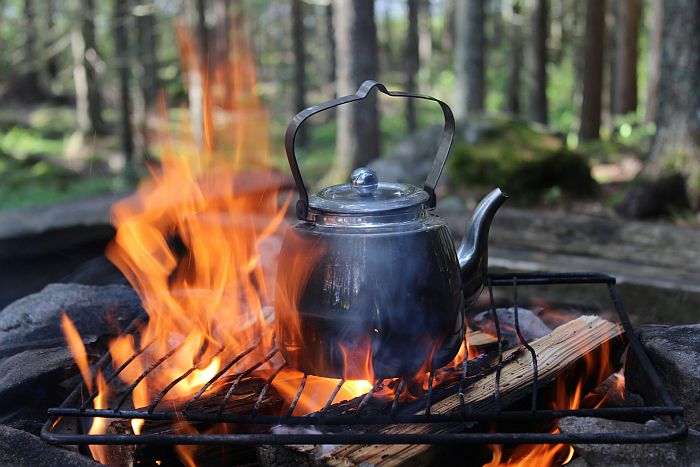
The beauty of campfire coffee is that you can make it with almost no gear. But if you want a smoother experience, a kettle is worth carrying. Pots without spouts tend to slosh and spill when you pour, especially for cowboy coffee or pour-over brewing. A simple pour spout solves this issue instantly.
Durable metal mugs also help since they handle uneven heating and won’t crack from temperature changes. And if you grind your beans at home, store them in a sealed container so they don’t absorb camp smells or moisture.
How Water Quality Changes Campfire Coffee
Most people forget this, but the water you use is half the flavor. If you’re using river, lake, or well water, filter it first — not because of taste alone, but because boiling doesn’t remove sediment or off-flavors. Even with a good filter, expect natural water to produce slightly earthier coffee. Many campers actually prefer this because it feels “right” in the outdoors.
If you bring water from home, you’ll get a cleaner flavor profile. Both approaches are fine — just don’t assume the coffee is bad when what you’re tasting is minerals or organic material from the water source.
Temperature Control: The Part Nobody Teaches
Coffee hates extremes. Water that’s too hot scorches the grounds and makes bitter coffee. Water that’s too cool leads to weak, flat-tasting brews. The perfect brewing window is between 195°F and 205°F, and while campers rarely carry thermometers, there’s an easy rule:
If the water is boiling hard, wait.
If it’s gently steaming, brew.
As long as you avoid violent bubbling, your campfire coffee will taste dramatically better.
Cleanup Matters More Than Most Campers Think
Coffee oils cling to metal pots, percolator tubes, filters, and plungers. If you leave them dirty overnight, they turn rancid and create off-flavors on the next batch. Clean your gear after every brew. Hot water and a little soap are usually enough.
If you’re in a wilderness area where soap use is restricted, scrub with hot water and sand, rinse well, and dry everything thoroughly before packing it. Coffee equipment needs to be stored dry to prevent mold.
Storing Grounds and Beans Properly on a Trip
Coffee absorbs moisture like crazy. Keep it in a tightly sealed container away from damp clothes, tent pockets, and cooking steam. If you’re carrying beans, grind them right before the trip for maximum flavor, or bring a small hand grinder if you’re fancy like that.
Freezing beans before the trip helps extend freshness, especially on longer outings. Once thawed, don’t refreeze — just use them.
How to Avoid Grit, Bitterness, or Weak Brews
Most camp coffee mistakes come down to three things: grinding size, water temperature, and steeping time. Grinding too fine leads to bitter over-extraction. Too coarse for certain methods leads to weak coffee. Water that’s too hot burns the grounds, and water too cool leads to flat flavor.
Steeping too long? Bitter.
Steeping too short? Watery.
Once you understand those variables, any campfire method becomes easy.
Creating a Morning Ritual
Half the joy of campfire coffee is the atmosphere. The smell of wood smoke, the glow of coals, the sound of water heating in a kettle — it’s a ritual that grounds you in the experience. Take your time. Let the fire settle. Sit back and enjoy the process. Coffee tastes better when it’s made slowly, intentionally, and somewhere the Wi-Fi can’t find you.
The Bottom Line
Making coffee on a campfire isn’t difficult — it just requires patience, steady heat, and knowing which brewing method fits your style. Cowboy coffee is rustic and surprisingly smooth when done right. Percolators brew strong, classic coffee for groups. Pour-over keeps things clean and bright. French press offers depth and richness. And instant coffee saves the day when you’re cold, tired, or not in the mood to fuss with gear.
Start with good water, use coals instead of flames, control your temperature, and clean your gear afterward. Do that, and your campfire coffee will become one of the best parts of the entire trip.
