
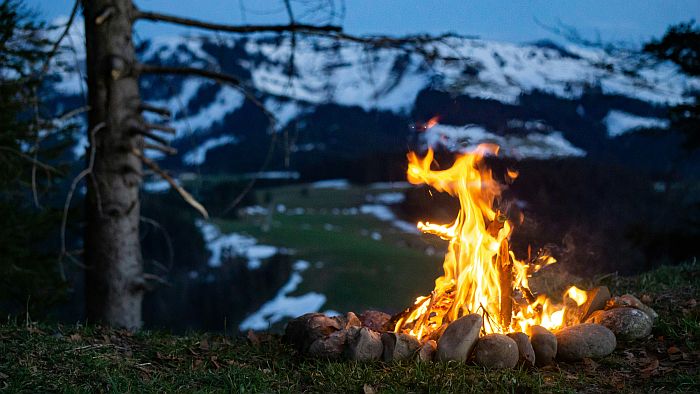
A great campfire doesn’t happen by accident. The difference between a roaring, long-lasting fire and a sad, smoky pile of disappointment usually comes down to one thing: the wood you use. Some woods burn hot and clean. Some burn slow and steady. Some burn like wet garbage even when they’re dry. If you’ve ever sat down to enjoy a fire only to spend the entire night dodging smoke clouds like you’re in a fencing match, you already know how important wood choice is.
This page may contain affiliate links; you can read our full disclosure.
This guide breaks down the best woods for campfires, why they perform differently, and which ones to avoid unless you enjoy coughing your lungs out. Once you understand what makes wood burn well, you can build a campfire anywhere with confidence.
What Makes Firewood “Good”?
Before getting into specific types, it helps to understand what separates great firewood from mediocre wood.
Density
Dense wood burns hotter and longer. Lightweight wood burns fast and weak.
Moisture Content
The drier the wood, the better it burns. Fresh-cut wood (green wood) is full of sap and water, causing smoke, hissing, and poor combustion.
Resin and Oil Content
High-resin woods ignite easily but tend to spark and smoke more.
Heat Output
Different woods produce different BTUs. Higher BTUs mean hotter, more efficient fires.
If you want long-lasting, clean heat with minimal smoke, dense hardwoods are the move.
Best Hardwoods for Campfires
Hardwoods are the gold standard. They burn hot, last longer, and create excellent coals for cooking.
Oak
Oak is one of the best all-around firewoods. It burns slowly, produces minimal smoke, and leaves long-lasting coals.
- High heat output
- Clean burn
- Long-lasting
If you could only choose one firewood forever, oak would be a safe bet.
Hickory
Hickory burns hotter than most woods available. It’s dense, powerful, and smells fantastic—especially for cooking.
- Extremely high BTUs
- Great aroma
- Slow-burning
Elite-tier firewood, especially for food.
Maple
Maple produces steady heat and burns longer than many woods, making it excellent for extended fires.
- Reliable, consistent burn
- Strong coal bed
- Low smoke
Ash
Ash burns well even when not fully seasoned. It’s forgiving and easy to manage.
- Burns when slightly damp
- Naturally low moisture
- Great for cooking or warmth
Beech
Beech burns hot and clean but must be fully seasoned to avoid smoke.
- High heat output
- Excellent coals
- Long burn time
Best Softwoods for Campfires
Softwoods ignite quickly and work best for starting fires, not maintaining them.
Pine
Lights easily and burns fast, but produces smoke and sparks.
- Fast ignition
- Hot initial flame
Use it to start the fire, then switch to hardwoods.
Fir
Cleaner than pine and excellent for kindling.
- Great starter wood
- Moderate heat
Cedar
Burns evenly and smells great, but doesn’t last long.
- Pleasant aroma
- Quick flames
Woods to Avoid
Some woods burn poorly or release harmful smoke.
Green Wood
High moisture content makes it smoke heavily and burn inefficiently.
Rotten or Punky Wood
Lightweight and decayed, it burns weak and erratically.
Driftwood
Salt-treated driftwood releases toxic fumes. Never burn it.
Construction Lumber
Treated wood releases chemicals that are unsafe to inhale or cook over.
Seasoned vs. Unseasoned Wood
Seasoned wood has been dried long enough to burn properly.
Signs of seasoned wood
- Cracked ends
- Lighter weight
- Hollow sound when struck
- Loose bark
Signs of unseasoned wood
- Feels heavy
- Damp or cool
- No cracking
- Tight bark
Seasoned hardwood burns hotter, cleaner, and longer.
Best Wood for Cooking
- Hickory
- Oak
- Maple
- Ash
- Pecan
Avoid pine, cedar, spruce, and any wood with visible sap.
Final Takeaway
The best campfire comes from the right wood. Dense hardwoods provide lasting heat and clean burns, while softwoods excel at getting things started. Avoid wet, rotten, or treated wood at all costs. Combine fast-starting softwood with slow-burning hardwood and your fire will burn hotter, cleaner, and longer.
Choose the right wood and campfires stop being work — they become comfort.