
This page may contain affiliate links; you can read our full disclosure.
Packing for a camping trip is basically a battle between what you think you need and what you’ll actually use. Most beginners bring way too much junk — stuff that takes up space, adds weight, or actively makes the trip worse. And once you haul it all to camp, you’re stuck babysitting it the whole weekend.
So let’s save your back, your sanity, and your tent space. Here’s a straight-shooting guide on what NOT to bring camping — based on real-world experience, not Pinterest fantasy lists.
This isn’t about minimalism. It’s about bringing what matters and ditching everything that turns your campsite into a garage sale.
Don’t Bring Anything You Can’t Afford to Lose
If it would break your heart — or your wallet — to lose it, leave it at home. Campsites are full of things that destroy valuables: dirt, moisture, smoke, sharp rocks, surprise rainstorms, and raccoons with criminal intent.
Absolutely do NOT bring:
- Fancy jewelry
- Expensive watches
- High-end cameras (unless you’re on a dedicated photo trip)
- Anything sentimental
Nature doesn’t care about emotional attachment. It will happily swallow your valuables.
Don’t Bring Half Your Closet
A classic rookie mistake is packing clothes like you’re staying at a resort. Camping is dirty, smoky, sweaty, and wonderful — but you don’t need a new outfit every few hours.
Skip:
- Bulky fashion clothing
- Multiple pairs of shoes
- Cotton hoodies that stay wet forever
- “Just in case” outfits that never get worn
Bring functional layers that dry fast, pack small, and don’t hold odor. Your tent is not a walk-in closet.
Don’t Bring Breakable Dishes From Home
Real glass and ceramic dishes have no place at a campsite. They break, they’re heavy, and they’re miserable to clean outdoors.
Do NOT bring:
- Ceramic plates
- Glass bowls
- Regular kitchen cups
- Porcelain mugs
Camping and breakables don’t mix. Stainless steel, plastic, or enamelware is the way to go.
Don’t Bring Massive Coolers Packed With Unnecessary Food
You’re going camping for a weekend — not reenacting the Oregon Trail.
Avoid:
- A week’s worth of groceries for a two-day trip
- Multiple full-size coolers
- Foods that spoil fast
- Meals that require complicated prep
A cooler isn’t a refrigerator. Ice melts, things leak, and everything slowly marinates in regret.
Don’t Bring Giant Speakers or Anything That Blasts Sound
You are not hosting a music festival at the campground.
Leave at home:
- Oversized Bluetooth speakers
- Subwoofers
- PA systems
- Anything that rattles nearby tents
Camping is about fresh air and natural sounds — not blasting music at 1 a.m. because you “paid for the site.”
Don’t Bring Firewood From Home
Transporting firewood spreads invasive pests and is banned in many parks.
Do not bring:
- Firewood from home
- Random lumber scraps
- Pallets with nails
Buy local firewood instead. It burns better and protects local ecosystems.
Don’t Bring Perishable Foods That Require Too Much Effort
Camping is not the time for high-maintenance meals.
Skip:
- Raw fish fillets
- Homemade freezer meals
- Unrefrigerated dairy
- Complex recipes requiring multiple pots and spices
Your camp stove is not a Michelin kitchen. Keep meals simple.
Don’t Bring Massive Knives or Movie-Prop Blades
A small camp knife or multi-tool is all most campers need.
Oversized blades:
- Take up too much space
- Are dangerous for beginners
- Make you look like you’re hunting dragons
Bring tools you’ll actually use — not conversation pieces.
Don’t Bring Disposable Plastic Water Bottles
Cases of disposable bottles turn into trash fast.
Instead, bring a reusable water jug or hydration container. It’s easier to manage and doesn’t leave your campsite littered with empties.
Don’t Bring Your Entire Toolbox
A few basic tools are fine. A full mechanic’s kit is not.
You don’t need:
- Cordless drills
- Angle grinders
- Half a socket set
- Heavy hammers
- Large pry bars
A multi-tool or compact camping hatchet covers almost everything.
Don’t Bring Oversized Furniture
If it belongs in a living room, it doesn’t belong at a campsite.
Leave behind:
- Recliners
- Rocking chairs
- Full-size tables
- Oversized shade structures you won’t actually use
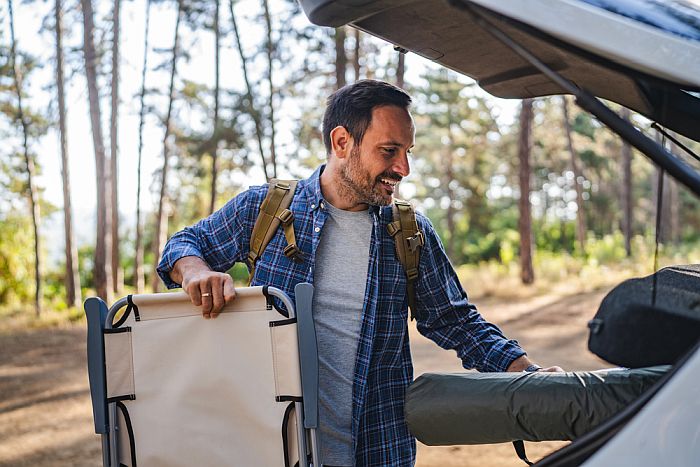
Camp chairs and a small table are plenty.
Don’t Bring Too Many Toys for Kids
Kids don’t need half their toy box.
They do NOT need:
- Ten balls
- Fourteen glow sticks
- Six inflatables
- Every toy they own
Give them sticks, rocks, dirt, and a creek. Nature handles the rest.
Don’t Bring Scented Lotions or Perfume
Strong scents attract bugs. You’ll smell good briefly and spend the rest of the trip getting eaten alive.
Skip anything heavily scented.
Don’t Bring Every Gadget You Own
Unnecessary tech includes:
- Tablets
- Laptops
- Gaming consoles
- Hair dryers
- Curling irons
- Electric blankets
Camping is the perfect place to unplug. Without power, this gear becomes dead weight instantly.
Don’t Bring Cheap Gear That Can Fail
The outdoors is not the place to test bargain-bin equipment.
Avoid:
- Gas-station tents
- Sleeping bags meant for sleepovers
- Dollar-store flashlights
- Broken camp chairs “that might work”
Reliable gear matters. Bad equipment ruins trips fast.
Don’t Bring Anything Illegal or Against Campground Rules
This should be obvious — but it isn’t.
Do not bring:
- Fireworks
- Weapons where they’re banned
- Alcohol in dry campgrounds
- Pets where pets aren’t allowed
- Generators during quiet hours
Always check campground rules to avoid fines or eviction.
Don’t Bring Your Complaining Friend
The fastest way to ruin a peaceful weekend is bringing someone who hates bugs, dirt, walking, nature, and fun.
Not everything belongs on a packing list.
Final Thoughts
Camping is supposed to simplify life. Every unnecessary item adds weight, clutter, noise, or frustration.
The goal isn’t to bring everything you might need — it’s to bring the essentials and leave the junk behind. Start with this list and you’ll already be ahead of most first-time campers who show up looking like they’re moving in.
