
This page may contain affiliate links; you can read our full disclosure.
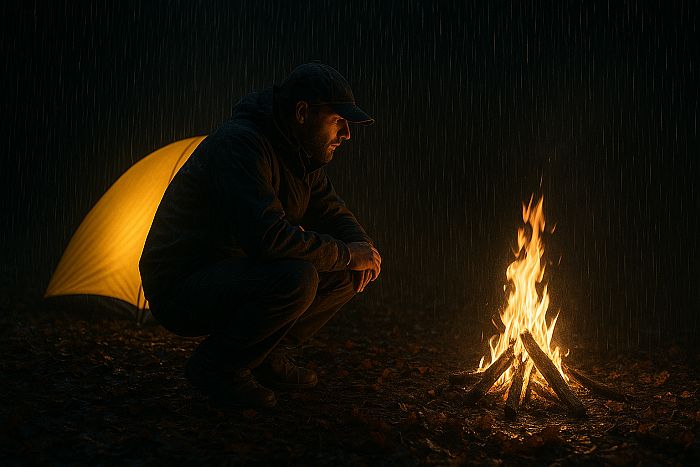
A campfire in the rain separates the hobby campers from the people who actually know what they’re doing. Anyone can light a fire on a sunny afternoon with perfectly dry wood. But keeping one alive during a downpour? That takes technique, patience, and a little stubbornness. Rain doesn’t automatically kill a fire — it only kills the ones built badly.
This guide covers everything you need to know: how to start a fire when everything is wet, how to shield it from the elements, and how to keep it burning even when the sky is actively trying to put it out.
Understanding How Rain Affects a Fire
Rain doesn’t truly “extinguish” a fire unless the water cools the fuel below its combustion temperature. Your job isn’t to fight the rain — your job is to give the fire enough heat, airflow, and protection to stay above that critical threshold.
Three things kill most campfires in the rain:
- Wet fuel
- Loss of airflow
- Heat dissipating too fast
If you manage those three factors, your fire survives almost anything short of a monsoon.
Step 1: Build a Proper Fire Base
Most people skip this step, and that’s why their fire dies as soon as the ground gets soggy.
Why you need a raised base:
When rain hits the ground, moisture seeps upward. A fire built directly on wet soil or mud cannot stay hot enough to survive.
How to build the base:
- Lay a platform of wrist-thick logs side by side
- Add a layer of dry bark or flat pieces of wood
- Stack your tinder on top of that
This keeps your fire insulated from rising moisture.
If you have no dry wood, use:
- Large rocks
- A thick layer of dry leaves topped with bark
- Driftwood that’s been dried by sun
Anything that lifts your fire off the ground will help.
Step 2: Use the Right Fire Structure for Wet Conditions
Some fire layouts work better than others when the rain is coming down.
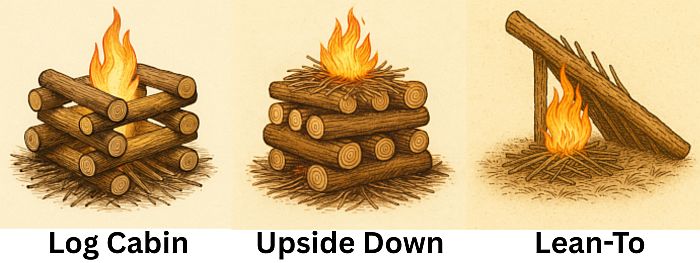
The Log Cabin Fire
This is ideal in the rain because it creates a square frame that shields the inner flame while channeling airflow. The structure protects your tinder and kindling long enough for the fire to gain strength.
The Upside-Down (Top-Down) Fire
- Big logs on the bottom
- Medium logs above
- Kindling and tinder on top
The fire burns downward, so the lower logs preheat and dry out before the flame reaches them.
The Lean-To Fire
Perfect for steady rain. A “roof log” protects your flame while giving it shelter to grow.
Pick the structure based on how hard it’s raining and what wood you have available.
Step 3: Choose the Right Wood — Wet Doesn’t Mean Useless
Rainy days mean most wood around you is damp, but damp isn’t dead.
Look for dry wood in these places:
- Under fallen logs
- Inside standing dead trees
- Under evergreen branches
- Beneath overhangs or rock shelves
- In the center of thick logs (split wood exposes dry inner material)
Prioritize hardwoods:
Hardwoods burn hotter, last longer, and survive rain better than softwoods. Oak, maple, ash, birch, and beech are ideal.
Use softwoods only to start the fire:
Pine, cedar, and fir ignite quickly, but they won’t hold up against a steady drizzle. They’re excellent for getting the blaze going, though.
Step 4: Feather Sticks and Fatwood Are Your Allies
When everything is wet, you need foolproof ignition.
Feather Sticks
Take a knife and shave long curls into a stick without cutting them off. This exposes dry inner wood and creates fast-igniting edges that burn even when wet.
Fatwood
If you find pine with resin-rich core wood, that stuff lights like it owes you money. Highly effective in rain.
Birch Bark
Lights even when wet thanks to the natural oils inside it.
If you prep enough ignition material, you can start a fire in almost any weather.
Step 5: Protect Your Fire From Above
Rain coming straight down is your biggest enemy. Your job is to make sure water never hits the heart of your fire.
Options for overhead protection:
- A tarp pitched at a steep angle
- A poncho tied between trees
- Dense evergreen branches
- Rock overhang
- A cooking tripod with a shield
Never hang a tarp too low — fires need ventilation. Keep it high enough that heat and sparks don’t melt or ignite the material.
A well-pitched tarp can keep a fire roaring during a legit storm.
Step 6: Feed the Fire Smart — Not Wild
Dumping big wet logs on a fresh fire will smother it immediately. You need to bring fuel in gradually.
The correct progression:
- Tinder
- Fine kindling
- Thicker kindling
- Small logs
- Medium logs
- Large logs only when flames are strong
Even when it’s pouring, a strong core flame can dry and ignite damp logs — but only if you build up to it properly.
Step 7: Create an Airflow Corridor
Most fires in the rain die because of smothering. Moisture in the air and damp wood both limit oxygen flow.
Fix this by:
- Leaving gaps between logs
- Building a partial windbreak (not full — full kills airflow)
- Elevating your fire with stones
- Tilting logs so air can flow underneath
Your fire doesn’t just need heat — it needs to breathe.
Step 8: Keep a Reserve of Dry Fuel on Deck
Veteran campers always protect their next rounds of fuel. While the fire burns, place fresh logs close enough to dry them but not close enough to catch fire prematurely.
A perimeter of drying logs = fuel security.
Step 9: Use the Heat You’ve Already Created
Once your fire builds a deep bed of coals, your job gets way easier. A strong coal bed keeps burning even when rain hits the fire from above.
Coals are the engine of your fire.
If you can maintain the coals, you can keep the fire going indefinitely.
Step 10: Know When to Build the Fire Under Shelter First
If it’s pouring hard, start the fire under shelter — tarp, lean-to, rock overhang — and relocate it once flames are strong and stable.
Trying to ignite tinder in open rain is a rookie mistake.
Mistakes That Kill Campfires in the Rain
Avoid these common fire-killers:
- Building the fire directly on wet ground
- Using only softwoods
- Throwing on large wet logs too early
- Putting the tarp too low
- Smothering the fire with debris
- Ignoring airflow
- Expecting waterlogged wood to ignite quickly
If your fire dies in rain, it’s usually due to one of these.
Final Takeaway
Keeping a campfire going in the rain isn’t luck — it’s mostly prep and technique. Build a solid base, start with the right structure, gather dry inner wood, use feather sticks or fatwood, protect the fire from above, and maintain airflow. If you create a strong enough initial blaze, the fire will fight the rain for you.
Once you learn how to do this, wet-weather fires stop being intimidating and start becoming one of the most satisfying outdoor skills you can master.
