
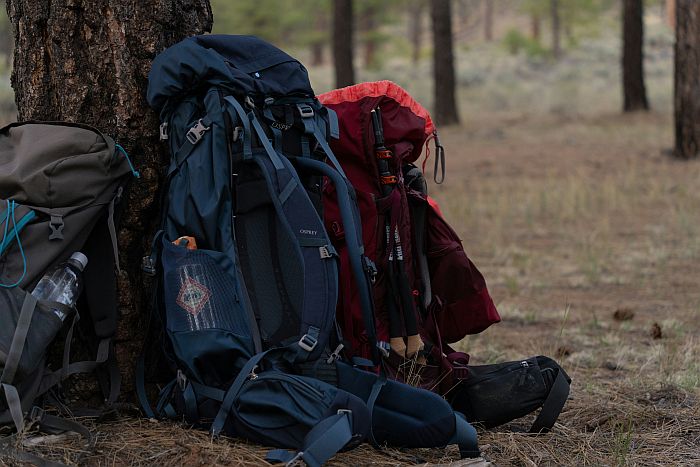
Backpacking feels awesome right up until your pack starts chewing on your shoulders like a feral raccoon. The key is carrying the right amount of weight — enough gear to stay safe, but not so much that you’re hallucinating by mile two. Here’s how to dial in your ideal load.
This page may contain affiliate links; you can read our full disclosure.
The Simple Rule of Thumb
Most backpackers do best carrying 15–25% of their body weight. That’s the standard “don’t destroy your spine” range.
Quick Reference
- 150 lb hiker → 22–38 lbs
- 180 lb hiker → 27–45 lbs
- 200 lb hiker → 30–50 lbs
If your pack weighs more than a toddler you’d refuse to carry, it’s time to rethink your gear.
Ultralight, Lightweight, and Traditional Loads
Your backpacking style plays a huge role in what “normal” weight looks like.
Ultralight Backpacking
- Pack weight: 10–20 lbs
- Philosophy: If it doesn’t prevent death or spark joy, it stays home
- Requires experience and usually expensive gear
Lightweight Backpacking
- Pack weight: 20–30 lbs
- The sweet spot for most hikers
- Comfortable without hauling an entire REI store
Traditional Backpacking
- Pack weight: 30–50+ lbs
- More food, more comfort, more “just in case” items
- Fine for strong hikers or short trips — brutal on long climbs
What Actually Makes Your Pack Heavy?
Shelter
Your tent is often the biggest weight hog. Modern one- to two-person tents can weigh under three pounds and are usually worth the upgrade.
Sleep System
Your sleeping bag and pad together typically weigh 3–6 lbs, depending on temperature rating.
Water
One liter of water weighs 2.2 lbs. This alone can turn a reasonable pack into a medieval torture device.
Food
Plan on 1.5–2.5 lbs of food per day, depending on appetite and trip length.
Clothing
People love packing every piece of clothing they own. Don’t. Layer smart and avoid duplicates.
“Just in Case” Gear
The fastest way to turn a good pack into a regrettable one.
How to Lighten Your Backpack Without Suffering
Ditch Redundancy
One headlamp, one spare pair of socks, one warm layer. Not twelve.
Upgrade the Big Three
Your shelter, sleep system, and pack are the easiest places to cut serious weight.
Carry Only the Water You Need
If water sources are available, filter as you go instead of hauling gallons uphill.
Choose Multi-Use Gear
A buff that works as a hat, pillow, and pot holder is doing the Lord’s work.
When You Can Carry More Weight
- Short-distance trips
- Cold conditions that require heavier insulation
- Hiking with beginners who need lighter packs
- Carrying shared gear for kids, partners, or friends (congrats — you’re the pack mule)
Signs Your Pack Is Too Heavy
- Your shoulders scream before mile one
- You’re leaning forward like you’re apologizing to the trail
- Blisters form faster than your patience evaporates
- You stop at every rock pretending you “just want to check the view”
If your pack is ruining the hike, it’s too heavy. Period.
Final Takeaway
Aim for 15–25% of your body weight. Go lighter whenever possible and heavier only when necessary. A well-balanced pack keeps you moving comfortably and actually enjoying the trip — not counting every step like you’re trapped in trail purgatory.