
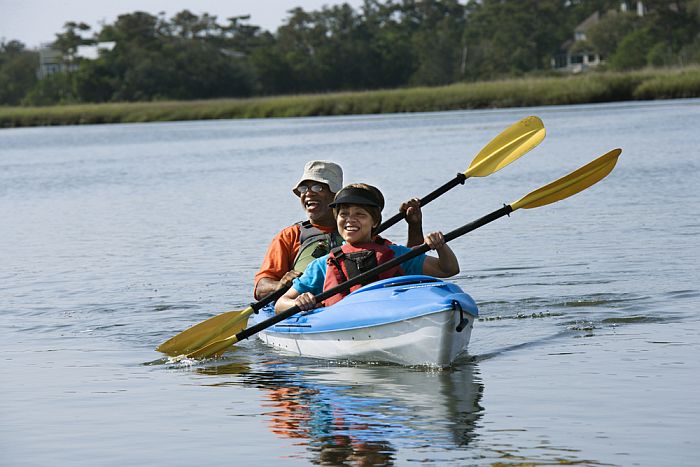
Tandem kayaking is one of those outdoor activities that looks deceptively simple from shore. Two people, one boat, wide open water — how hard can it be? Then you climb into a tandem for the first time and realize it responds to teamwork the same way a dance floor reacts to two people with different rhythm. When you paddle together, the kayak glides. When you don’t, it feels like arguing with furniture.
This page may contain affiliate links; you can read our full disclosure.
For beginners, tandem kayaking is a fantastic way to explore lakes, slow-moving rivers, and coastal inlets. It’s stable, social, and forgiving once you learn the basics. This guide covers everything you need before climbing into a two-person kayak — from choosing the right boat to keeping the trip from turning into a constant paddling correction session.
Why Tandem Kayaks Are Great for Beginners
Tandem kayaks are naturally more stable than most solo kayaks. The longer hull spreads weight across a wider surface, making tipping far less likely. That stability lets beginners relax and enjoy the scenery instead of constantly fighting for balance.
There’s also comfort in not paddling alone. You’ve got a partner for communication, shared responsibility, and quick adjustments. Beginners tend to learn faster and feel more confident when someone else is in the boat with them.
Tandems also carry more gear. Whether it’s a day trip, light fishing, or a short overnight paddle, the extra storage and higher weight capacity make packing less stressful.
If you want to improve balance, steering, and stroke efficiency without the twitchy feel of a small kayak, a tandem offers a gentler learning curve.
Choosing the Right Tandem Kayak
Not all tandem kayaks behave the same. Some are built for calm lakes, others for touring longer distances, and a few can handle light surf or moving water. Beginners usually do best with wide recreational tandems that prioritize stability and comfort over speed.
Sit-on-top tandems are often the easiest option for new paddlers. They drain water easily, feel more stable, and allow simple re-entry if someone falls out. Sit-in tandems offer better protection from wind and splash but require more confidence and flexibility.
Weight matters too. Tandem kayaks can be heavy, making loading and carrying a two-person job. Using lightweight paddles helps offset fatigue, and something like the Bending Branches Sunrise Glass Paddle can make learning stroke rhythm far easier.
Seat comfort is another overlooked detail. Two hours on a hard plastic seat gets uncomfortable fast. Adjustable backrests or padded seats make a huge difference, especially for beginners.
Getting In and Out Without the Chaos
Stability starts before you ever paddle. One person should hold the kayak steady while the other gets in, then switch roles. From shore, the stern paddler usually enters first. From a dock, the order often reverses.
The biggest beginner mistake is shifting weight suddenly. Tandems are stable, but dramatic movements still upset balance. Take your time and communicate every move so no one surprises the boat.
Once seated, adjust footrests so your knees stay slightly bent. Locked legs reduce control and increase fatigue.
Who Steers a Tandem Kayak?
The paddler in the back handles most of the steering. The stern controls direction much like a rudder. The bow paddler sets the rhythm, watches ahead, and provides steady forward power.
Steering adjustments come from gentle sweep strokes and subtle body lean. When both paddlers stay in sync, the kayak tracks straight. When rhythm breaks down, the kayak starts wandering.
Over time, partners develop a natural cadence. A tandem that moves smoothly together is one of the most satisfying beginner kayaking experiences.
How to Paddle in Sync Without Fighting the Boat
The front paddler sets the pace. The rear paddler mirrors the timing. When both blades enter the water together, the kayak glides cleanly.
Beginners often paddle at different speeds without realizing it. The fix is simple — communicate before changing pace and stick to smooth, consistent strokes. Speed comes from rhythm, not force.
Lightweight paddles make syncing easier. Some beginners prefer something budget-friendly like the Aqua Bound Sting Ray Hybrid Paddle, which offers good control without wearing you out.
Basic Tandem Kayak Safety
Every paddler should wear a properly fitted life jacket and carry a whistle. Tandems feel stable, but wind, waves, or a sudden shift can still flip the boat.
Sit-in tandems benefit from a small bilge pump, and a dry bag keeps essentials protected. A simple grab line or compact throw rope adds peace of mind without overloading your gear.
Beginners should avoid strong currents, tides, and fast rivers. Calm lakes and slow-moving water let you focus on coordination instead of survival paddling.
A simple tow line can also help if fatigue hits unexpectedly. Something like the NRS Compact Rescue Tow Line is lightweight insurance you hope you never need.
Turning, Braking, and Handling Wind
Turning a tandem requires patience. The bow paddler uses a forward sweep while the stern matches with a rear sweep. The kayak pivots slowly between the two forces.
Braking is simple. Both paddlers drag their blades backward, slowing the kayak quickly and smoothly.
Wind affects longer kayaks more easily. If the bow starts drifting, adjust rhythm early and let the stern paddler apply corrective strokes before the boat turns too far.
Common Beginner Mistakes (and Easy Fixes)
Most tandem problems come from mismatched strokes — different speeds, different depths, or different timing. The fix is always communication.
Another mistake is leaning outward during turns. Instead, lean slightly inward to keep the center of gravity stable.
Many beginners also grip the paddle too tightly. A relaxed grip and loose wrists reduce fatigue and improve control.
Final Takeaway
Tandem kayaking is one of the easiest and most rewarding ways for beginners to get on the water. With extra stability, shared effort, and a forgiving learning curve, it’s ideal for couples, friends, and families.
Once you understand how to choose the right kayak, communicate clearly, and paddle in sync, the experience becomes smooth and enjoyable. Add lightweight paddles and basic safety gear, and your first tandem trip feels less like trial and error and more like relaxed exploration.