
This page may contain affiliate links; you can read our full disclosure.
Venomous Snakes of the United States: Identification, Range, Venom Toxicity, and Bite Symptoms
Snakes are not villains — but they are highly optimized defense systems wrapped in camouflage. Most venomous snake bites happen because a hiker accidentally gets too close, steps where they shouldn’t, or places a hand somewhere unseen.
Understanding where venomous snakes live, how dangerous their venom is, and what happens if you’re bitten dramatically reduces panic and increases survival outcomes.
Below are nine venomous snake species hikers may encounter in the United States, with detailed range maps (described), venom potency, and bite symptoms for each.
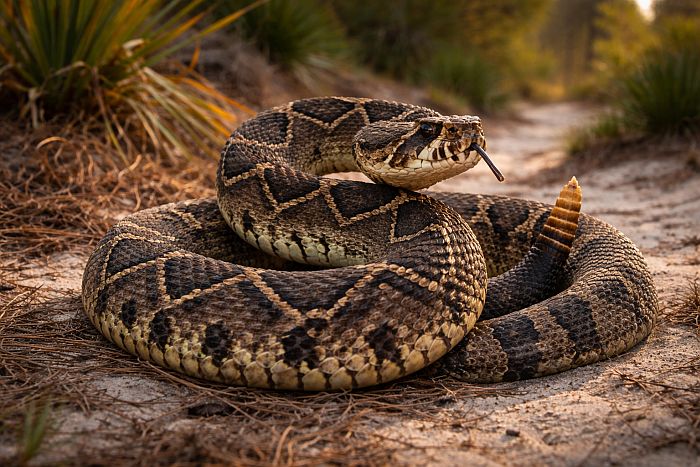
1. Eastern Diamondback Rattlesnake (Crotalus adamanteus)
Where They Are Found
- Coastal plains of the Southeastern United States
- Florida, southern Georgia, Alabama, Mississippi
- Dry pine forests, scrublands, sandy ridges
Venom Toxicity
- One of the most venomous snakes in North America
- Venom is hemotoxic (destroys tissue and blood cells)
- Large venom yield due to size (often 4–6 feet long)
Symptoms of a Bite
- Immediate, severe pain
- Rapid swelling and bruising
- Blistering and tissue necrosis
- Nausea and vomiting
- Low blood pressure
- Internal bleeding
- Untreated bites can be fatal
Why hikers should care: This species delivers massive venom doses and does not rely on “dry bites” as often as smaller snakes.
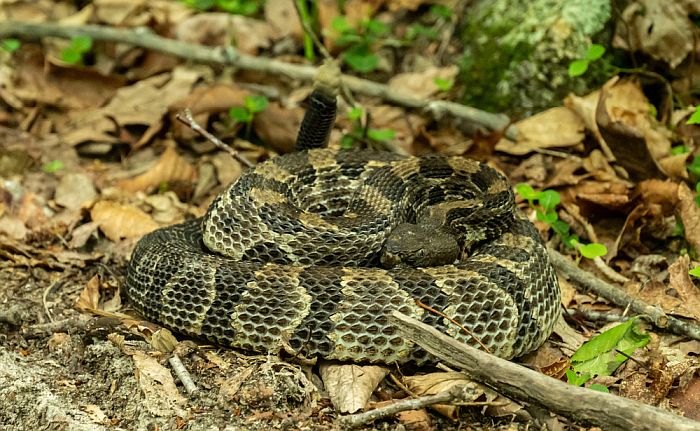
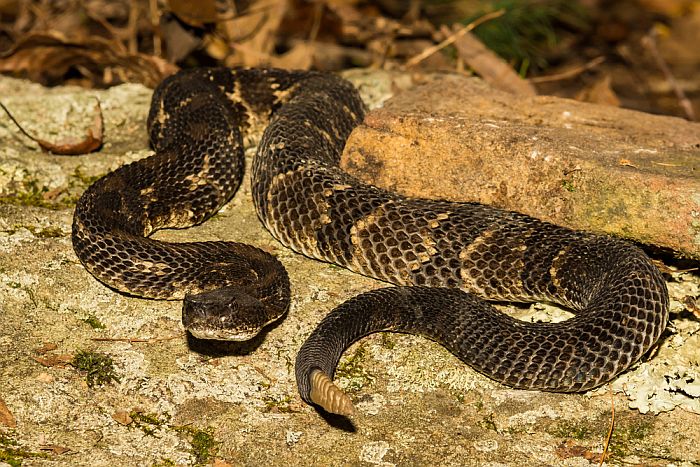
2. Timber Rattlesnake (Crotalus horridus)
Where They Are Found
- Eastern and Central U.S.
- Appalachians, Ozarks, New England, Midwest
- Forested hillsides, rocky ledges, wooded trails
Venom Toxicity
- Primarily hemotoxic, some populations have neurotoxic components
- Venom strength varies by region
- Moderate to high venom yield
Symptoms of a Bite
- Burning pain at bite site
- Swelling spreading up the limb
- Blood clotting abnormalities
- Weakness and dizziness
- Possible respiratory distress in neurotoxic cases
Important: Timber rattlesnakes are extremely well camouflaged in leaf litter — many bites occur when stepped on.
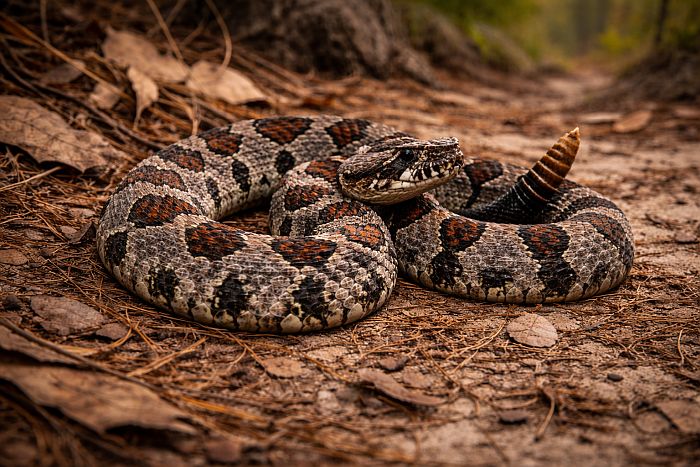
3. Pigmy Rattlesnake (Sistrurus miliarius)
Where They Are Found
- Southeastern U.S.
- Florida, Georgia, Carolinas, Alabama
- Pine flatwoods, swamps, trail edges
Venom Toxicity
- Less potent than larger rattlesnakes
- Still hemotoxic
- Small venom volume but medically significant
Symptoms of a Bite
- Sharp localized pain
- Swelling and redness
- Mild tissue damage
- Rare systemic symptoms
- Severe reactions possible in children or allergic individuals
Danger factor: Their tiny size and faint rattle make them easy to miss.
4. Copperhead (Agkistrodon contortrix)
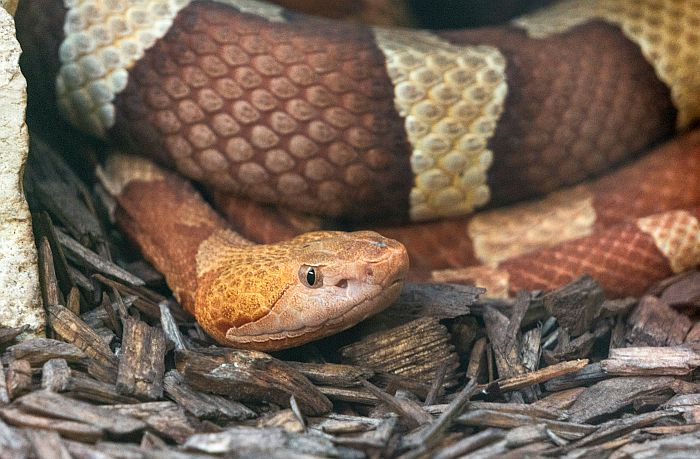
Where They Are Found
- Eastern and Central U.S.
- From Texas to New England
- Wooded hills, rocky trails, suburban edges
Venom Toxicity
- Mild to moderate hemotoxic venom
- Least lethal of North American pit vipers
- Bites are rarely fatal
Symptoms of a Bite
- Immediate pain
- Swelling and bruising
- Limited tissue damage
- Nausea and weakness
- Minimal systemic effects in most cases
Reality check: Copperheads account for many bites because they rely heavily on camouflage and don’t flee easily.
5. Cottonmouth / Water Moccasin (Agkistrodon piscivorus)
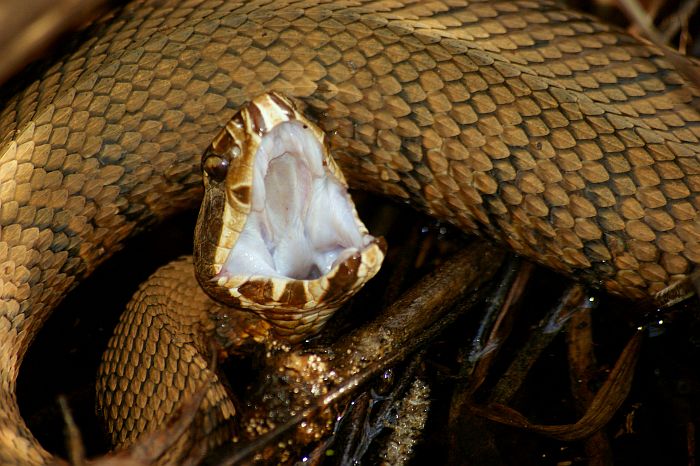
Where They Are Found
- Southeastern U.S.
- Swamps, rivers, lakes, wetlands
- From Texas to the Carolinas
Venom Toxicity
- Hemotoxic venom
- Stronger than copperheads
- Causes significant tissue destruction
Symptoms of a Bite
- Severe pain
- Rapid swelling
- Extensive tissue necrosis
- Bleeding disorders
- Infection risk
Note: Cottonmouth bites are serious but rarely fatal with treatment.
6. Eastern Coral Snake (Micrurus fulvius)
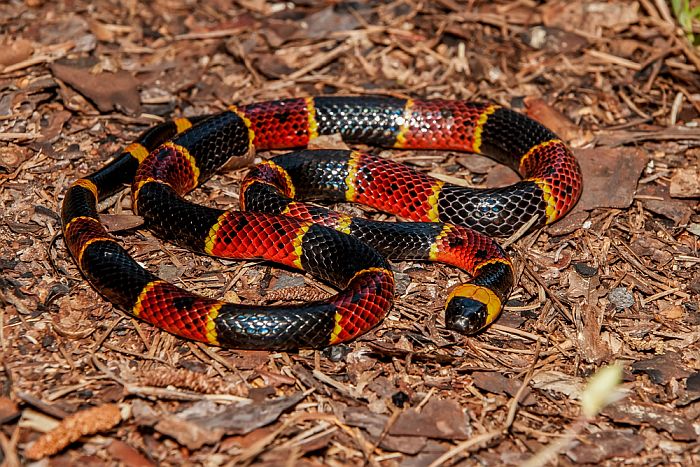
Where They Are Found
- Southeastern U.S.
- Florida, Georgia, Alabama
- Sandy soils, pine forests, leaf litter
Venom Toxicity
- Highly neurotoxic
- Venom affects the nervous system
- Small venom yield but extremely potent
Symptoms of a Bite
- Minimal initial pain
- Delayed symptoms (hours later)
- Slurred speech
- Drooping eyelids
- Difficulty breathing
- Paralysis
- Respiratory failure if untreated
Critical: Coral snake bites can seem mild at first — delay is deadly.
7. Western Diamondback Rattlesnake (Crotalus atrox)
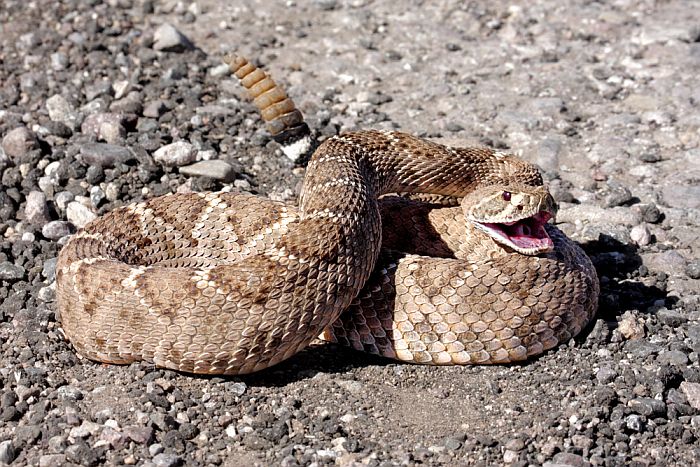
Where They Are Found
- Southwestern U.S.
- Texas, Arizona, New Mexico
- Deserts, grasslands, rocky trails
Venom Toxicity
- Hemotoxic venom
- Large venom yield
- Responsible for many serious bites in the Southwest
Symptoms of a Bite
- Intense pain
- Swelling and bleeding
- Tissue destruction
- Nausea and vomiting
- Shock in severe cases
8. Mojave Rattlesnake (Crotalus scutulatus)
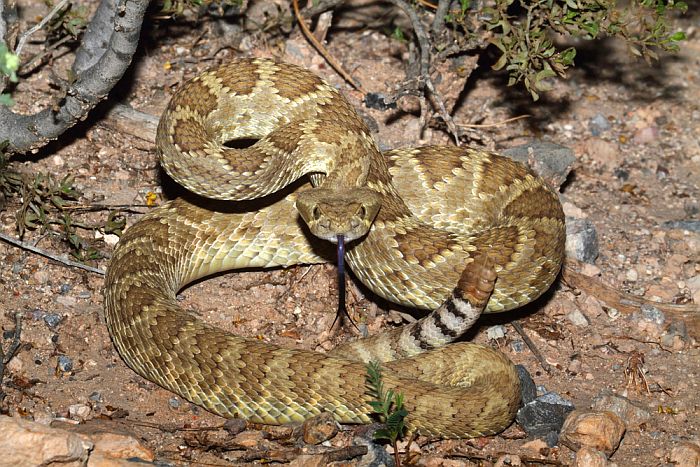
Where They Are Found
- Desert Southwest
- Arizona, Nevada, California, New Mexico
Venom Toxicity
- One of the most dangerous rattlesnake venoms
- Combination of hemotoxic and neurotoxic
- Known as “Mojave toxin”
Symptoms of a Bite
- Weakness and paralysis
- Difficulty breathing
- Minimal swelling compared to damage
- Neurological failure
- Can be fatal without rapid antivenom
Scary part: Less pain does NOT mean less danger.
9. Sidewinder Rattlesnake (Crotalus cerastes)
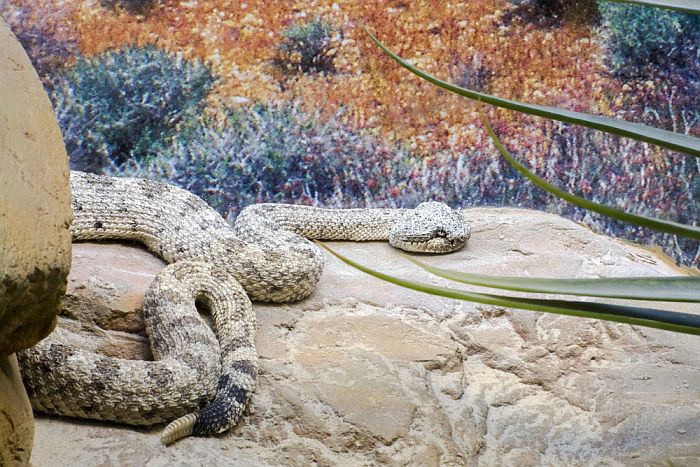
Where They Are Found
- Southwestern deserts
- California, Arizona, Nevada
- Sandy dunes and arid trails
Venom Toxicity
- Hemotoxic venom
- Lower venom yield than larger rattlesnakes
- Still medically significant
Symptoms of a Bite
- Pain and swelling
- Localized tissue damage
- Rare systemic effects
- Severe reactions possible with delayed care
What To Do If Bitten (Quick Summary)
- Call emergency services immediately
- Stay calm and limit movement
- Keep the bite at or slightly below heart level
- Remove tight clothing or jewelry
- Do not cut, suck, ice, or tourniquet
- Do not attempt to identify the snake by capturing it
Final Truth
Snakes are not hunting hikers. But venom doesn’t care about intentions.
In the end, avoiding venomous snakes while hiking comes down to awareness rather than fear. Most bites occur not because snakes are aggressive, but because hikers move too quickly, stop paying attention to their surroundings, or assume the trail is safer than it really is. When you slow your pace, watch where you step, and respect the habitats you’re moving through, the risk drops dramatically.
It’s also worth remembering that modern medical treatment has made snake bites far less deadly than they once were. Knowing what symptoms to watch for, understanding how venom affects the body, and responding calmly and quickly can make the difference between a serious emergency and a fully recoverable injury. Panic and outdated myths are often more dangerous than the snake itself.
Hiking puts you in wild places, and wild places come with wild creatures. Snakes are simply part of that equation. When you understand them, respect their space, and prepare for the unlikely instead of ignoring it, you can keep your focus where it belongs — on the trail, the views, and getting home safely with nothing more than sore legs and a good story.
