
This page may contain affiliate links; you can read our full disclosure.
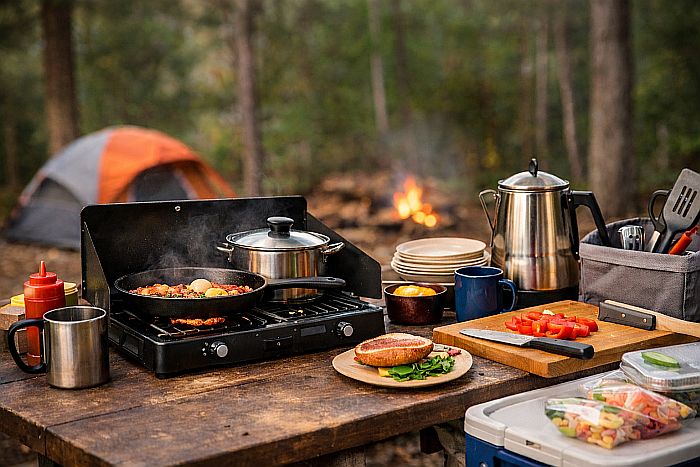
Outdoor cooking sounds simple until you’re standing at camp with food to make, daylight fading, and gear that doesn’t quite work the way you expected. Most camping meals don’t fall apart because people can’t cook. They fall apart because the cooking equipment wasn’t chosen with real-world use in mind.
You don’t need a full outdoor kitchen to eat well while camping. You need reliable equipment that matches how you actually camp, not how gear catalogs imagine it.
This guide focuses on outdoor cooking equipment that’s worth owning, easy to use, and practical for real camping trips.
Start With How You Camp (This Drives Every Buying Decision)
Before buying or packing cooking gear, get clear about your camping style.
Ask yourself:
- Are you car camping or carrying gear long distances?
- Cooking full meals or reheating simple food?
- Weekend trips or longer stays?
- Solo, couple, or group camping?
Most campers are car camping for short trips. That means weight matters less than stability, convenience, and ease of cleanup — and that should guide what you buy.
The Core Outdoor Cooking Setup
Every functional camp kitchen is built around four essentials:
- A dependable heat source
- Basic cookware that can handle real use
- Simple, durable utensils
- A realistic plan for prep and cleanup
If any of these are missing or overbuilt, cooking becomes frustrating fast.
Heat Sources: Where Spending a Little More Pays Off
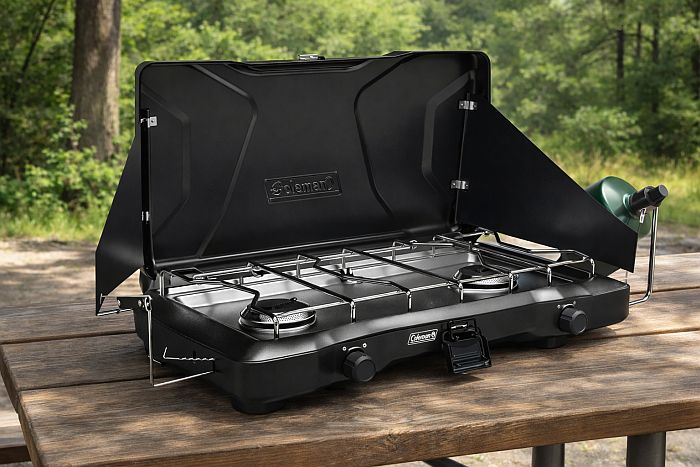
Camp Stoves (Primary Choice for Most Campers)
A propane camp stove is the most practical option for the majority of camping trips. A two-burner stove offers flexibility without unnecessary complexity.
When choosing a stove, focus on:
- Stable construction that won’t tip easily
- Reliable ignition
- Wind resistance
- Compatibility with standard propane canisters
You don’t need extreme output numbers. What matters is consistent heat and control, especially when cooking more than one item at a time. This is one area where buying a proven model usually saves frustration long-term.
Single-Burner Stoves
Single-burner stoves work well for:
- Solo campers
- Simple meals
- Backup cooking setups
They take up less space but limit multitasking. For campers who cook often, upgrading to two burners is usually worth it.
Cookware: Buy Fewer Pieces, Buy Better Ones
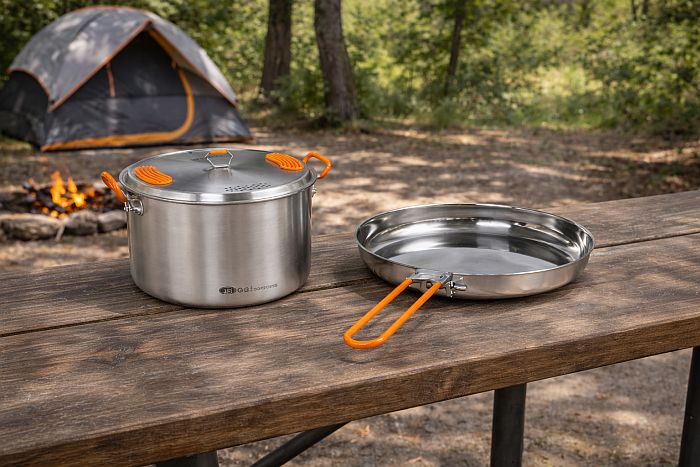
You can cook almost everything with two pieces of cookware.
Essentials
- One frying pan
- One pot with a lid
That’s the foundation, and you can get this as a cookset. Extra pieces usually add clutter without much benefit.
Cast Iron vs Lightweight Cookware
Cast iron:
- Excellent heat retention
- Handles campfire and stove use well
- Heavy, but extremely durable
Lightweight aluminum or stainless:
- Easier to transport
- Faster heating
- More convenient for compact setups
Both work well. Frequent campers often end up owning one of each for different trips. Cheap cookware tends to warp or lose coatings quickly, so this is another category where quality matters.
Utensils: Simple Tools That Don’t Fail
Camping utensils don’t need to be fancy — they need to work.
Minimum kit:
- Spatula
- Tongs
- Large spoon
- Sharp knife
- Cutting board
Avoid flimsy plastic tools that bend or melt. One solid knife is more useful than a multi-piece camp utensil kit. Durable tools last longer and make cooking easier.
Plates, Cups, and Eating Gear
This category comes down to convenience vs preference.
Disposable plates and cups are popular for short trips, group camping, and locations where water access is limited. They simplify cleanup and reduce time spent managing dishes.
Reusable eco-friendly polypropylene dishes work well for campers who prefer washing dishes or camp where water access is easy. They’re durable, stack efficiently, and don’t need frequent replacement.
Both options work. The best choice is the one that keeps meals simple and cleanup manageable for your campsite setup.
Food Prep: Where Smart Planning Saves the Most Time
Food prep is often overlooked, but it has the biggest impact on camp cooking efficiency.
Useful items:
- Compact cutting board
- Paper towels
- Food storage containers
Prepping ingredients at home makes cooking faster and cleaner at camp. Pre-cut vegetables, pre-portioned meals, and organized containers reduce mess and save time — especially at the end of the day.
Coolers and Food Storage
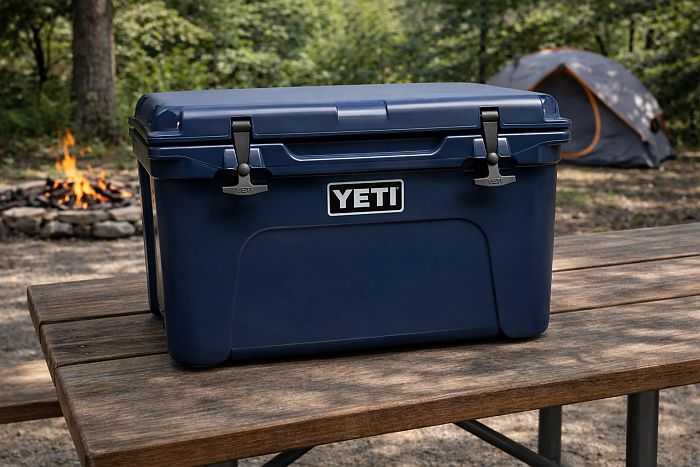
Cold food management is critical for both comfort and safety.
Common options:
- Hard coolers for longer trips
- Soft coolers for weekend camping
- Ice packs instead of loose ice to reduce water buildup
Matching your food choices to your cooler capacity prevents overpacking and unnecessary hassle. Higher-quality coolers hold temperature longer and require less ice, which can be worth the investment for frequent campers.
Coffee Gear (Worth Getting Right)
A reliable coffee setup makes mornings better.
Popular options:
- Percolators
- Pour-over systems
- French presses
- Instant coffee for simplicity
Any option works as long as it’s easy to use and easy to clean. Most campers settle on one method and stick with it.
Cleaning Gear: Small Items That Matter
Cleanup goes smoother when it’s planned for.
Basic kit:
- Small wash bin or collapsible sink
- Scrub sponge
- Dish towel
- Trash bags
Cleaning as you cook keeps the campsite organized and avoids dealing with a pile of dishes later.
Storage and Organization
Organization makes camp cooking easier.
Helpful additions:
- Dedicated cooking tote
- Separate food bin
- Small prep table if picnic tables aren’t guaranteed
You don’t need a full camp kitchen system. You need gear that stays organized and easy to reach.
Equipment You Can Usually Skip
Unless you camp often and know you’ll use them, most campers can skip:
- Full cookware sets
- Specialty camp ovens
- Single-purpose gadgets
Simple setups are faster to pack, easier to clean, and easier to manage.
Adjusting for Trip Length
Weekend Trips
Prioritize:
- Minimal cookware
- Simple meals
- Fast cleanup
Longer Trips
Add:
- Extra fuel
- Backup supplies
- Better food organization
Increase quantity, not complexity.
Final Thoughts
Outdoor cooking equipment doesn’t need to be excessive to be effective. The best gear:
- Works consistently
- Cleans easily
- Makes meals simpler instead of harder
When your cooking setup supports the trip instead of dominating it, you’ve chosen well.
Focus on reliable basics, invest where it counts, and skip what doesn’t add real value.
