
This page may contain affiliate links; you can read our full disclosure.
Water is the No. 1 survival priority. You can last weeks without food, but only a few days without water — and even less if you’re sweating, stressed, or dealing with heat. Finding water in the wild isn’t about luck; it’s about knowing where it hides and how to collect it without poisoning yourself.
Here’s exactly how to locate water when things get serious.
1. Follow the Landscape — Water Always Moves Downhill
Water obeys gravity every single time. If you’re lost or dehydrated, head downhill.
Look for:
- Valleys
- Ravines
- Gullies
- Washouts
- Low points between hills
These areas often lead to:
- Streams
- Rivers
- Springs
- Pools
- Seasonal runoff
Even if a stream is dry on the surface, dig into damp sand or mud — water often sits a few inches below.
2. Look for Signs of Water in Plants and Vegetation
Plants are giant arrows pointing to moisture.
Good Indicators:
- Lush green vegetation in a dry region
- Willow, cottonwood, cattails, reeds
- Vines or broadleaf plants in otherwise dry terrain
Follow plant clusters — they often lead to a water source hidden beneath.
Important
Don’t eat random plants. Nature loves making poisonous look delicious.
3. Follow Animals and Insects
Wildlife needs water just as badly as you do.
What to watch:
- Game trails heading downhill
- Bird behavior — early morning and evening flight lines often lead to water
- Insect activity — swarms of gnats or mosquitoes usually mean nearby moisture
Bees are especially reliable. They don’t wander far from water.
4. Use Natural Rock Formations as Water Collectors
Rocks make nature’s bowls.
Look for:
- Rock depressions
- Shaded cracks
- Basins
- Cliff shelves after rain
Tilt or siphon water out with fabric, or soak it up with moss or cloth and wring it into a container.
5. Dig a Seep or “Gypsy Well”
If the ground is damp but no water is visible, dig a hole 1–2 feet deep.
Steps:
- Look for wet sand or mud
- Dig a hole about 1 foot wide
- Allow it to fill from underground seepage
- Let debris settle
- Filter or boil before drinking
Takes time, but it works.
6. Use Solar Still Techniques (Slow, But Reliable)
A solar still uses the sun to pull moisture from the soil or plants.
Classic ground still:
- Dig a pit
- Place a container in the center
- Surround it with green vegetation
- Cover with plastic
- Place a small rock in the center to form a drip point
This produces water slowly — but any water is better than none.
Note
Solar stills are a last resort. They’re slow and calorie-intensive to build.
7. Collect Morning Condensation and Dew
Dew can save your life if you’re patient.
Collect dew by:
- Dragging clothing, bandanas, or grass bundles across vegetation
- Wrapping cloth around your legs and walking through tall grass at dawn
- Wringing moisture into a container
It’s slow, but reliable.
8. Harvest Rainwater Whenever Possible
Rainwater is one of the safest sources you’ll find in the wild.
Use:
- Tarps
- Jacket hoods
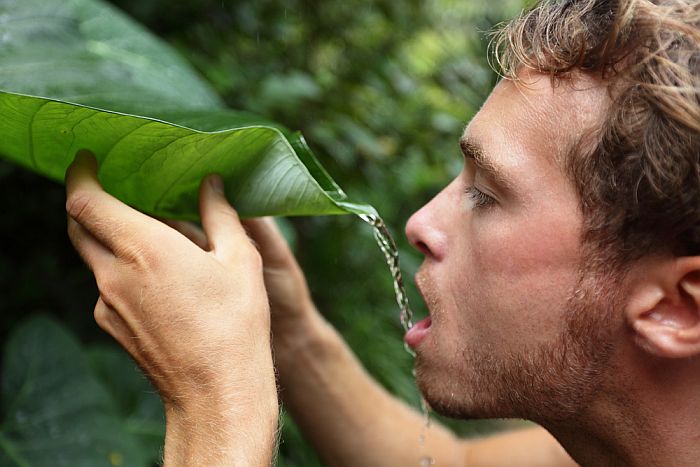
- Leaf funnels
- Rock bowls
- Anything that can catch water
If you’re lucky enough to get rain, take advantage of every drop.
9. Tap Tree Moisture (Certain Species Only)
Some trees hold drinkable sap or internal moisture.
Birch, maple, and some vines
Cutting a small notch can release clean water or sap.
Be careful
Not all trees are safe to tap. Avoid random vines unless you’re 100% certain of the species.
10. Snow and Ice (But Use Them Correctly)
Snow
Safe when melted, but:
- It must be melted first
- Eating snow causes rapid heat loss and worsens dehydration
Ice
Clear lake ice melts into clean water and is more efficient than snow.
Never use sea ice — the salt content is dangerously dehydrating.
Water You Should Avoid Drinking Raw
Some water sources will take you out faster than dehydration:
- Stagnant pools
- Water with dead animals in it
- Bright green algae blooms
- Industrial runoff
- Saltwater
- Eating unmelted snow
If it looks like a witch brewed it, don’t drink it.
Always Purify Your Water
Even clean-looking streams can contain:
- Giardia
- Bacteria
- Viruses
- Parasites
- Animal feces upstream
Best purification methods:
- Boiling (most reliable)
- Filters (Sawyer, Katadyn)
- Chemical tablets (Aquamira, iodine)
- UV purifiers
Survival rule: Clear water does not equal safe water.
Final Takeaway
Finding water in a survival situation is about reading the land, following life, and knowing how to collect moisture when obvious sources aren’t available.
Stay calm. Go downhill. Follow life. Purify everything.
Do that, and your odds improve dramatically.
